Most eye floaters are harmless clumps of dead cells or collagen in the vitreous gel that fills your eye. They become more common with age, especially after 50, and the vast majority do not require treatment. However, sudden-onset floaters accompanied by flashes can signal a serious condition such as a retinal tear that requires urgent attention. If floaters are associated with a shadow in your peripheral vision, a potentially sight-threatening condition such as retinal detachment may be present.
What Are Eye Floaters?
Eye floaters are small specks, threads or cobweb-like shapes that drift across your field of vision. They move with your eyes and seem to float in front of you, hence the name. What you're actually seeing are tiny shadows cast by particles suspended in the vitreous, the clear gel that fills most of your eye. These particles can be bits of dead cells, collagen fibres, or other microscopic debris that have accumulated over time.
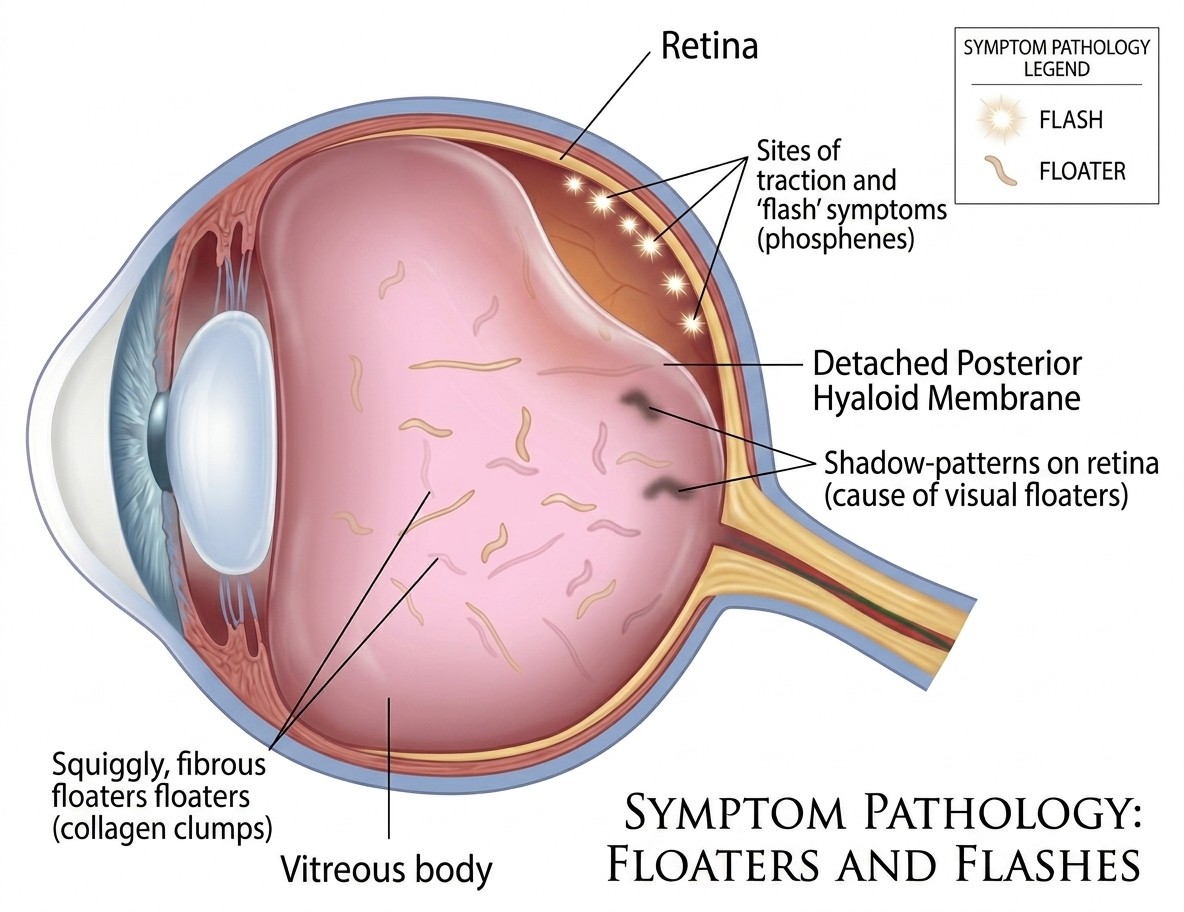
Floaters are most noticeable when you're looking at a bright, plain background, like a white wall, blue sky, or computer screen. They appear to move away when you try to look directly at them, which can be frustrating but is completely normal. The vitreous is a gel, not a liquid, so these particles don't simply sink or disperse; instead, they drift around as your eyes move.
Common Causes of Floaters
Age-related changes are the leading cause of floaters. As you get older, the vitreous gel gradually liquefies and shrinks, a process that accelerates significantly after age 50 to 60. This natural breakdown causes collagen fibres to clump together, creating the floaters you see. Research shows that posterior vitreous detachment (PVD), where the vitreous gel pulls away from the retina, becomes increasingly common with advancing age and is the most frequent cause of new-onset floaters in older adults.
High myopia (severe short-sightedness) is another significant risk factor. People with high myopia experience retinal thinning and changes to the vitreous structure, making them more prone to floaters at a younger age. In fact, lattice degeneration, a thinning of the peripheral retina, occurs in roughly one-third of myopic eyes compared to just 6–10% of the general population, increasing the likelihood of both floaters and more serious complications.
Posterior vitreous detachment is the most common pathological cause. When the vitreous gel pulls away from the retina due to age or myopia, it often triggers a sudden onset of floaters, sometimes accompanied by flashes of light. While PVD itself is usually harmless, it's the sudden appearance of many new floaters that warrants urgent evaluation, as it can occasionally signal a retinal tear.
Inflammation inside the eye can also produce floaters. Conditions affecting the uvea (the middle layer of the eye) or the vitreous itself can cause inflammatory cells and proteins to accumulate, appearing as floaters. Similarly, bleeding in the vitreous from diabetic retinopathy, retinal tears, or other vascular problems can create dark floaters that may look like a shower of debris.
Previous eye surgery or laser treatment may introduce floaters as a side effect. Even routine procedures can sometimes cause small amounts of bleeding or cellular debris in the vitreous.
When Floaters Are a Warning Sign
While most floaters are benign, certain patterns demand immediate attention. The key is recognising the difference between chronic floaters (which you've had for months or years and remain stable) and new, sudden floaters that appear within days.
Sudden floaters with flashes is the classic warning sign. Flashes occur when the vitreous gel tugs on the retina, stimulating light-sensitive cells. When floaters and flashes occur together, there is a meaningful risk of a retinal tear or retinal detachment.
A sudden increase in floater number is concerning. If you normally have a few stable floaters but suddenly notice dozens of new ones within a few days, this could indicate bleeding in the eye or a retinal event.
Dark or shadowy floaters that appear suddenly and persist may represent vitreous bleeding and require same-day assessment.
A shadow or curtain in your peripheral vision, especially if it progresses toward the centre of your vision, is a hallmark sign of retinal detachment. This is a medical emergency. Retinal detachment is painless (many patients are shocked to learn something this serious doesn't hurt), which makes it dangerously easy to dismiss and delay seeking care.
Floaters vs Flashes: Understanding the Difference
Floaters and flashes often occur together, but they're distinct phenomena with different implications. Floaters are shadows of particles floating in the vitreous gel; they move slowly across your vision and are most obvious in bright lighting. Flashes are bright streaks or sparks of light, usually at the edge of your vision, that occur when the vitreous gel or scar tissue mechanically stimulates the retina.
A few flashes here and there, especially if you've been experiencing them for years, are usually harmless and often accompany age-related PVD. However, new-onset flashes, particularly if they're accompanied by a sudden onset of many new floaters, warrant urgent evaluation because they suggest active vitreous traction on the retina, a potential precursor to a tear or detachment.
When to See an Eye Specialist Urgently
Same-day assessment is essential if you experience any of the following: sudden onset of many new floaters, new flashes of light combined with floaters, a shadow or curtain spreading across your vision from any direction, loss of peripheral vision, or a sudden change in the appearance or behaviour of existing floaters. Do not wait for an appointment; contact your eye clinic immediately or attend an emergency department with eye services.
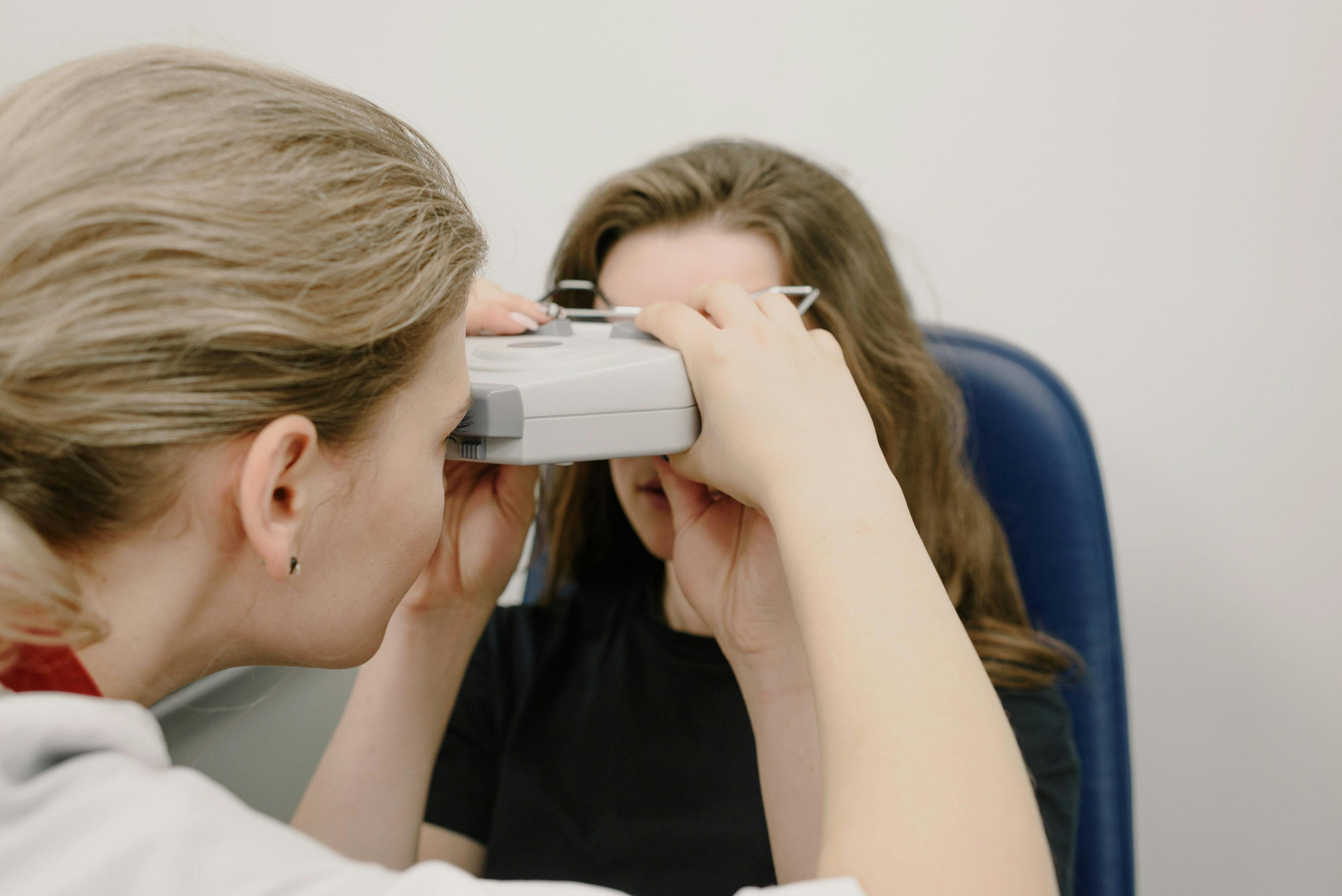
An appointment within a few days should be arranged if you've had new floaters for several days but they're not accompanied by flashes or vision loss. Your eye specialist will perform a dilated eye examination to assess whether there's any retinal pathology.
Routine follow-up is appropriate for stable, long-standing floaters that haven't changed. Many people live comfortably with floaters for years once they've been confirmed as benign. You might consider an annual eye screening to monitor your eye health, particularly if you have high myopia or other risk factors.
Frequently Asked Questions
Can floaters go away on their own?
Some floaters do improve or become less noticeable over time. As the vitreous continues to liquefy and the particles settle, you may become less aware of them. In other cases, floaters gradually drift below your line of sight or sink within the vitreous and become less bothersome. However, floaters typically don't disappear completely. If floaters are significantly impacting your quality of life, treatment options exist. Recent scientific studies indicate that oral nutritional supplements containing specific nutrient formulations (eg, Vitrocap N containing 125 mg L-lysine, 40 mg vitamin C, 26.3 mg Vitis vinifera extract, 5 mg zinc, and 100 mg Citrus aurantium) may help reduce their severity and improve overall visual comfort. Because floaters are physical clumps of degraded collagen within the eye's vitreous gel, standard over-the-counter multi-vitamins cannot simply dissolve them overnight. Vitrectomy (surgical removal of the vitreous gel) has a success rate of 92–98.5% in improving or eliminating floaters. YAG laser vitreolysis, a laser procedure, shows about 54% significant improvement compared to 9% in placebo groups, though results are more variable.
Should I go to A&E for sudden floaters in Singapore?
If your sudden floaters are accompanied by flashes, a shadow or curtain in your vision, or a sudden significant increase in floater number, yes, seek immediate evaluation at an emergency department or eye clinic that same day. Retinal detachment is a vision-threatening emergency, and early intervention dramatically improves outcomes. If you have new floaters without these additional warning signs, arrange an urgent appointment with your eye specialist within a few days. Your eye doctor needs to perform a dilated retinal examination to rule out retinal pathology.
Are floaters more common if you have high myopia?
Yes. High myopia significantly increases floater prevalence due to retinal thinning, myopic degeneration, and earlier onset of posterior vitreous detachment. People with high myopia often experience floaters at a younger age than the general population. Additionally, high myopia carries a higher lifetime risk of retinal detachment, roughly 1 in 300 people, compared to the general population. Regular eye screening becomes even more important if you're highly myopic.
Can stress cause eye floaters?
Stress itself doesn't directly cause floaters, but there's an indirect connection. Stress can trigger or worsen migraines, and people experiencing visual symptoms from stress or anxiety may become hyperaware of floaters they've always had, making them seem more noticeable. Additionally, chronic stress may contribute to vascular changes and eye health decline over time. If you're noticing new floaters during a stressful period, it's worth arranging an eye examination to confirm they're not related to a more serious cause.
References:
PVD prevalence and retinal detachment risk. arXiv, 2025.
Emergency signs of retinal detachment. Ubie Health.
Vitrectomy vs YAG vitreolysis outcomes. Liv Hospital.
Retinal detachment incidence and lifetime risk. Wiley Online Library.
Last reviewed: March 2026
Disclaimer: This article is for general informational purposes only and does not constitute medical advice. Please consult an ophthalmologist for personalised guidance.