Myopia, or short-sightedness, is very common among children in Singapore. A child with myopia can usually see near objects clearly, but distant objects — such as the whiteboard in school — appear blurred.
For many children, glasses or contact lenses provide clear vision. However, myopia is not only a matter of needing stronger glasses. Higher levels of myopia are associated with a greater lifetime risk of eye conditions such as retinal tears, retinal detachment, glaucoma, cataract and myopic macular degeneration.
The aim of myopia control is to slow progression during childhood, reduce the final degree of myopia where possible, and lower the risk of high myopia later in life.
Key points for parents
Myopia is common in Singapore children and often progresses during the school years.
Children may not complain even when their distance vision is blurred.
Outdoor time, sensible screen habits and regular breaks from near work are important.
Several evidence-based myopia control options are available.
Treatment slows progression but does not reverse myopia that has already developed.
The best option depends on the child’s age, prescription, rate of progression, lifestyle and ability to use treatment safely.
Why is myopia so common in Singapore?
Myopia develops due to a combination of genetic and environmental factors.
A child is more likely to become myopic if one or both parents are myopic. However, genes alone do not explain the high rate of myopia in Singapore. Environmental factors are also important, especially prolonged near work and limited outdoor exposure.
Many children in Singapore spend long hours reading, studying, using digital devices and attending indoor activities. These habits may increase the risk of myopia development and progression, particularly when outdoor time is limited.
When should children have their eyes checked?
Children should have an eye examination if parents or teachers notice signs of blurred distance vision. Some children may need an earlier check if there is a strong family history of high myopia, lazy eye, squint, or other eye conditions.
A baseline eye check around preschool age can be useful, especially if there are concerns. Children who are already myopic usually need regular monitoring because progression can occur quickly during the school years.
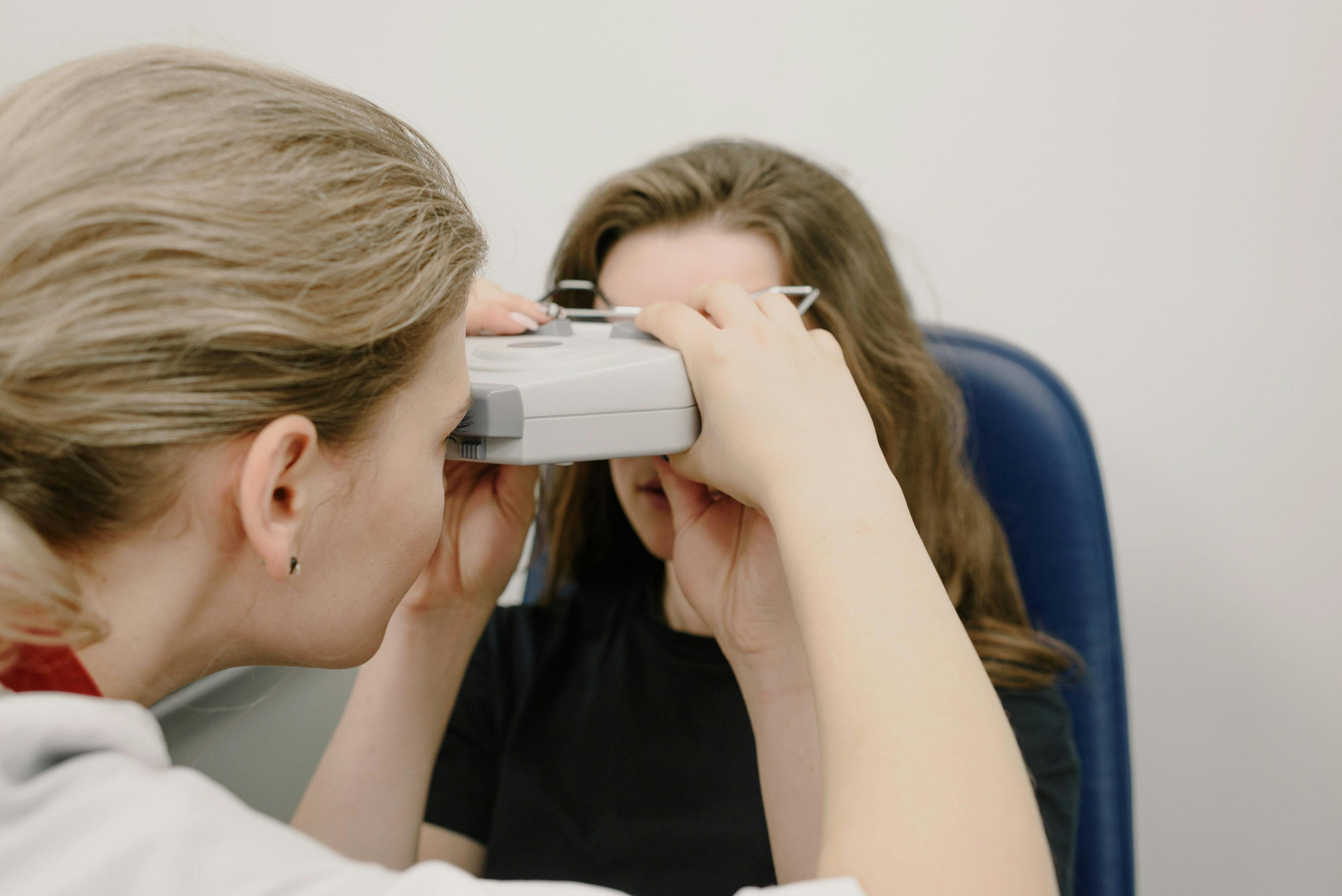
Monitoring may include:
checking the glasses prescription
measuring visual acuity
assessing eye alignment and general eye health
measuring axial length, which is the length of the eyeball, in suitable cases
Axial length is useful because myopia often progresses as the eyeball becomes longer.
Signs your child may be developing myopia
Children do not always realise their vision is blurred. Parents may notice:
squinting to see distant objects
sitting very close to the television or screen
difficulty seeing the whiteboard at school
moving closer to objects to see clearly
headaches or tired eyes after schoolwork
reduced confidence with ball games or outdoor activities
frequent complaints that distance vision is unclear
If these signs appear, an eye examination is recommended.
What can parents do at home?
Lifestyle measures are important for all children, whether or not they are already myopic.
Encourage outdoor time
Regular outdoor time appears to reduce the risk of myopia developing in children. The benefit is thought to relate to exposure to natural daylight, rather than any one specific outdoor activity.
Practical options include:
outdoor play after school
outdoor time during weekends
sports or activities in natural light
encouraging children to spend school breaks outdoors where possible
Outdoor time is helpful, but it may not be enough on its own for children whose myopia is already progressing.
Reduce prolonged near work
Near work includes reading, writing, homework, tuition work, handheld device use and screen-based learning.
Children should be encouraged to take regular breaks. A simple approach is the 20-20-20 rule: every 20 minutes, look at something far away for about 20 seconds.
This does not replace myopia treatment where treatment is needed, but it is a useful habit.
Manage screen time sensibly
Screens are part of modern school and home life, so the aim is not necessarily to eliminate them completely. Instead, parents can encourage healthier habits:
keep screens at a comfortable working distance
avoid very close viewing
take regular breaks
avoid long continuous periods of near work
balance screen time with outdoor activity
avoid screens close to bedtime where possible
Myopia control options
Several options can help slow myopia progression. These treatments do not usually stop myopia completely, and they do not reverse myopia that has already developed. Their aim is to reduce the rate of worsening.
The most suitable option should be chosen after an eye examination and discussion with an eye care professional.
Low-dose atropine eye drops
Low-dose atropine eye drops are commonly used for myopia control. They are usually applied once daily, often at night.
Studies have shown that low-dose atropine can slow myopia progression in many children. The most appropriate concentration varies depending on the child’s age, progression rate, tolerance and clinical findings.
Possible side effects include light sensitivity and near blur, although these are generally less common with lower concentrations than with higher-dose atropine. Children using atropine should be reviewed regularly to assess response and monitor for side effects.
Myopia-control spectacle lenses
Specially designed spectacle lenses can slow myopia progression in some children. These lenses look similar to ordinary glasses but use optical designs that aim to reduce the stimulus for further eyeball elongation.
They may be suitable for children who prefer spectacles or are not ready for contact lenses. As with all treatments, they need to be worn consistently to have the best chance of working.
Orthokeratology
Orthokeratology, or Ortho-K, uses specially fitted rigid contact lenses worn overnight. These lenses temporarily reshape the cornea so that the child can often see clearly during the day without glasses.
Ortho-K can also slow myopia progression in some children. However, it requires careful lens hygiene, regular follow-up and a motivated child and family. Because the lenses are worn overnight, there is a small but important risk of corneal infection if they are not used properly.
Myopia-control soft contact lenses
Some soft contact lenses are designed specifically for myopia control. These may be useful for suitable children, especially those involved in sports or who strongly prefer not to wear glasses.
Contact lens use requires good hygiene, maturity and parental supervision. Not every child is suitable.
Combination treatment
Some children may benefit from more than one approach, such as low-dose atropine combined with myopia-control spectacles or contact lenses. Combination treatment may be considered when myopia progresses despite a single method, but it should be individualised.
How often should children be reviewed?
Children undergoing myopia control are usually monitored every few months, depending on age, prescription, progression rate and treatment type.
At each review, the eye care professional may assess:
vision
prescription
axial length
treatment tolerance
compliance with the treatment plan
whether the treatment needs adjustment
Regular monitoring is important because some children progress faster than others.
When should a child see an eye specialist?
Parents should arrange an eye assessment if:
the child is squinting or struggling to see distant objects
the glasses prescription is increasing quickly
there is a strong family history of high myopia
the child has very young-onset myopia
there are concerns about lazy eye, squint or unequal vision
parents are considering atropine, Ortho-K or other myopia-control options
the child has eye pain, redness, double vision or sudden changes in vision
Can myopia be reversed?
Myopia cannot usually be reversed once the eyeball has elongated. Glasses, contact lenses and refractive surgery can correct vision, but they do not shorten the eye.
Myopia control aims to slow worsening during childhood, so that the child’s final level of myopia is lower than it might otherwise have been.
Are myopia-control treatments safe?
The commonly used methods have been studied and are widely used, but each has its own limitations and risks.
For example:
atropine may cause light sensitivity or near blur in some children
Ortho-K and contact lenses require careful hygiene to reduce infection risk
spectacle lenses need to be worn consistently
treatment response varies from child to child
This is why treatment should be personalised and monitored.
Final thoughts
Myopia is common in Singapore, but parents are not powerless. Regular eye checks, outdoor time, sensible screen habits and appropriate myopia control can all help reduce the risk of progression.
If your child is becoming short-sighted or their prescription is increasing, an eye examination can help determine whether myopia control is appropriate and which option may suit your child best.
References
Chia, A., Chua, W. H., Cheung, Y. B., et al. (2012). Atropine for the treatment of childhood myopia: safety and efficacy of 0.5%, 0.1%, and 0.01% doses (Atropine for the Treatment of Myopia 2). Ophthalmology, 119(2), 347-354.
Yam, J. C., Jiang, Y., Tang, S. M., et al. (2019). Low-concentration atropine for myopia progression (LAMP) study: a randomised, double-blinded, placebo-controlled trial of 0.05%, 0.025%, and 0.01% atropine eye drops in myopia control. Ophthalmology, 126(1), 113-124.
Bao, J., Huang, Y., Li, X., et al. (2022). Spectacle lenses with aspherical lenslets for myopia control vs single-vision spectacle lenses: a randomised Clinical Trial. JAMA Ophthalmology, 140(5), 472–478.
Rose, K. A., Morgan, I. G., Ip, J., et al. (2008). Outdoor activity reduces the prevalence of myopia in children. Ophthalmology, 115(8), 1279-1285.
Morgan, I. G., French, A. N., Ashby, R. S., et al. (2018). The epidemics of myopia: Aetiology and prevention. Progress in Retinal and Eye Research, 62, 134-149.
Goss, D. A., & Winkler, R. L. (1983). Progression of myopia in school children: report of a longitudinal study. Optometric Vision Science, 60(10), 776-780.
Au Eong JTW, Tsai JHJ, Crosby NJ, Au Eong KG. Childhood myopia and the coronavirus disease 2019 pandemic: Lessons for future pandemics. Taiwan Journal of Ophthalmology 2024 May 27;14(2):284-285. doi: 10.4103/tjo.TJO-D-24-00010. eCollection 2024 Apr-Jun.
Lee DMX, Au Eong JTW, Au Eong KG. Prophylactic treatment of childhood myopia: a game-changer in combating the scourge of myopia? Frontiers in Public Health 2025 Jul 14;13:1556199. doi 10.3389/fpubh.2025.1556199. eCollection 2025.
Last reviewed: June 2026
Disclaimer
This blog article is for educational purposes and should not be construed as medical advice. The information presented is based on current research and clinical practice but may not apply to every individual case. Every child is unique, and management decisions should be made in consultation with a qualified eye care professional who has examined your child. IECRC and the author(s) do not accept liability for any adverse effects arising from the use of information in this article. If you have concerns about your child's vision or eye health, please consult with an ophthalmologist or optometrist promptly. References to specific treatments, medications, or brands are for informational purposes and do not constitute endorsement or recommendation specific to your situation.