
Your eyes have been watering all morning. You've wiped them so many times that your colleagues probably think you've been crying. But you haven't been. Your eyes just won't stop producing tears, and it's getting frustrating.
This happens to more people than you'd expect. What's particularly confusing is that watery eyes often have nothing to do with sadness or emotion. In fact, your eyes might be watering because they're actually too dry. Strange, isn't it?
Whether your eyes water when you step outside into the wind, or they stream constantly throughout the day, there's usually a fixable reason behind it. Let's look at what might be going on.
How Your Tear System Works
Think of your tear system like a tiny plumbing networ. Tears are produced by the lacrimal gland sitting above your outer eyelid. Every time you blink, these tears spread across your eye surface. They're not just water, though. Your tears are a precise cocktail of water, oils, and proteins that keep your eyes comfortable and your vision clear.
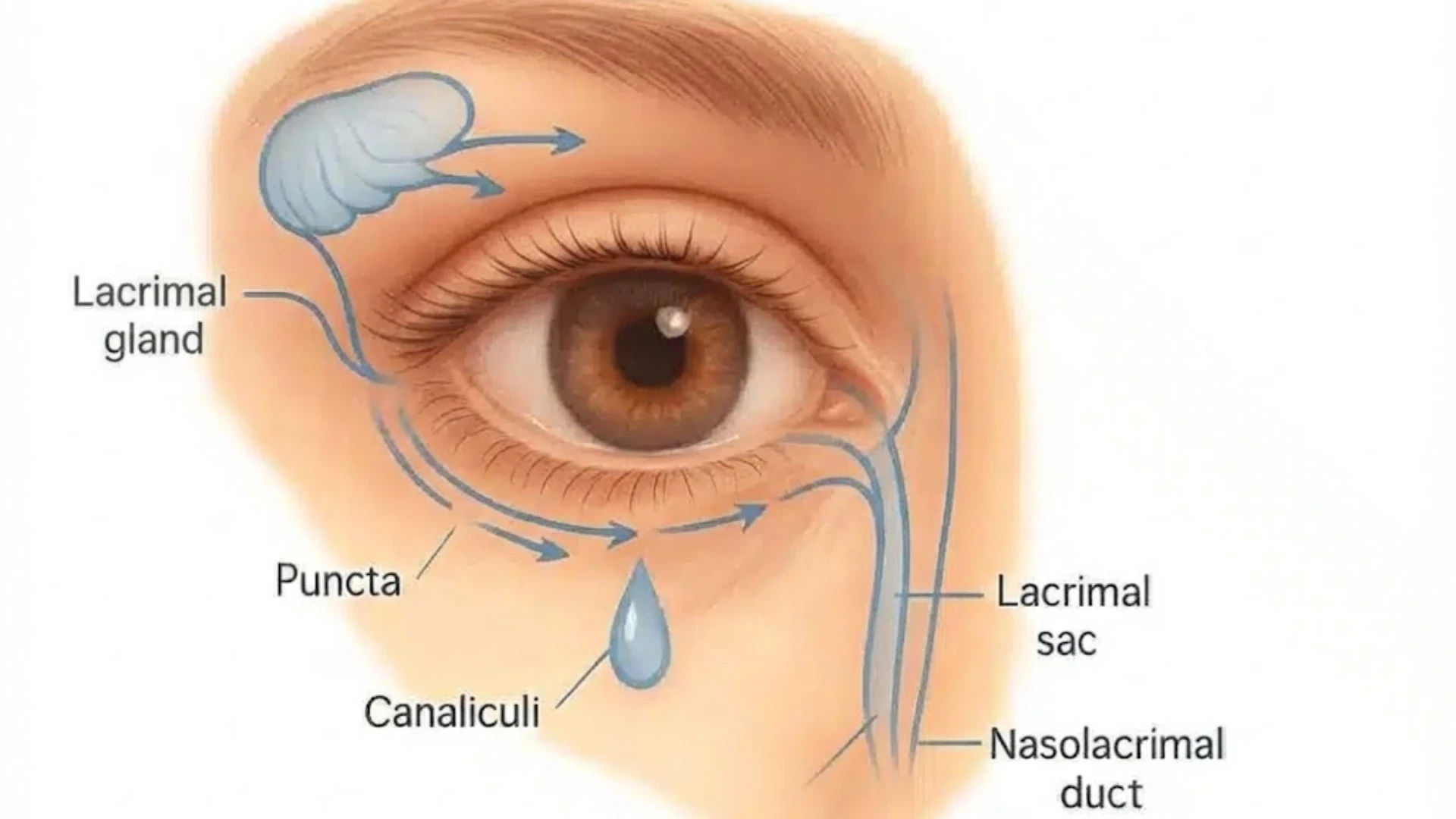
Once tears have done their job, they need somewhere to go. At the inner corner of each eyelid, you have tiny drainage holes called puncta. Tears flow through these into small tubes (canaliculi), then into the lacrimal sac, and finally down the nasolacrimal duct into your nose. That's why your nose runs when you cry.
When something disrupts this system, tears overflow onto your cheeks instead of draining properly. Doctors call this epiphora. Research shows it happens for two main reasons: either you're making too many tears, or they're not draining away as they should.
Why Your Eyes Keep Watering
The Dry Eye Contradiction
This is where things get counterintuitive. One of the biggest culprits behind watery eyes is dry eye disease. Yes, really.
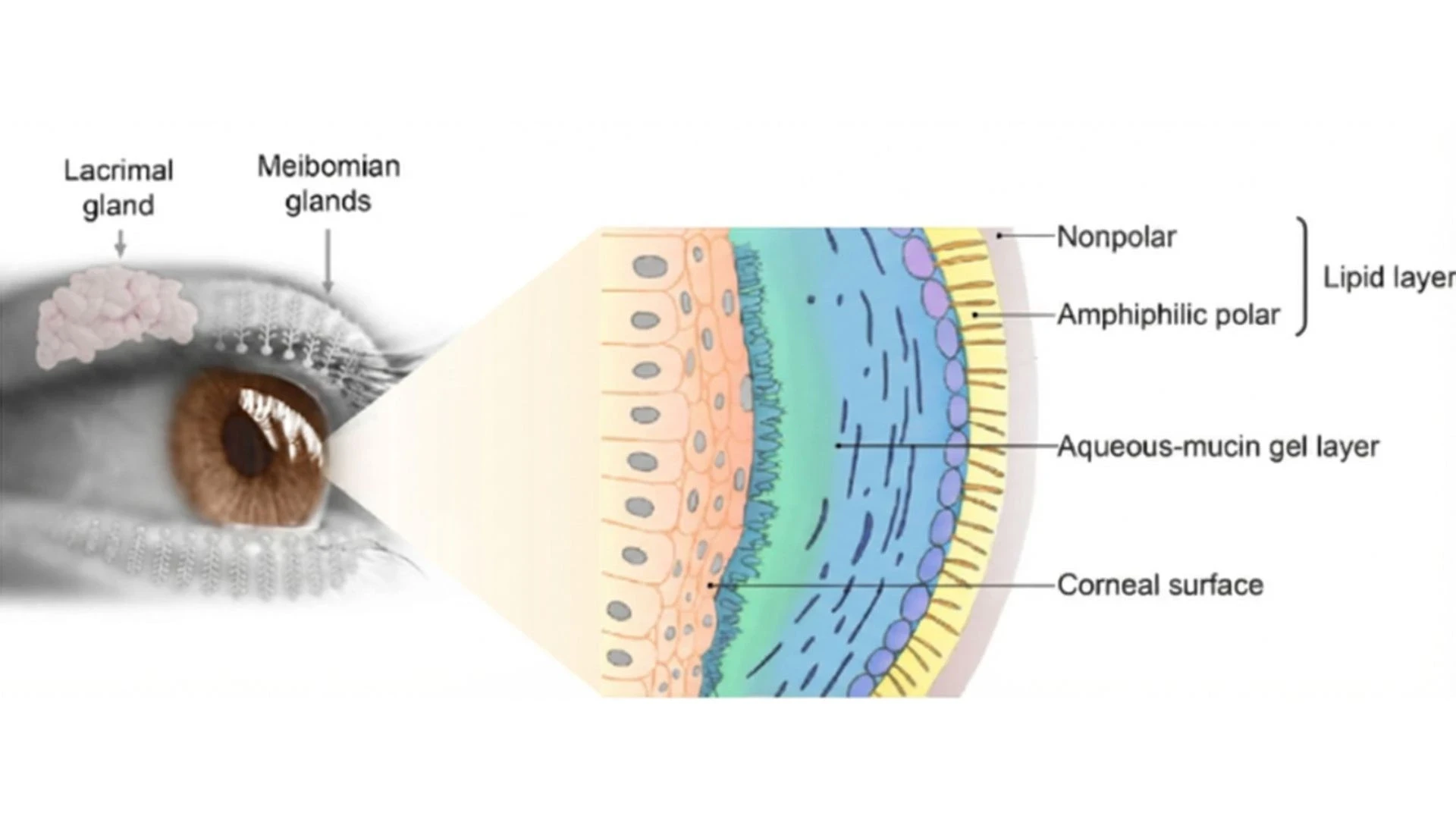
Your eye surface has sensors that detect dryness or irritation. When they're triggered, they send urgent signals to your tear glands saying, "We need moisture now!" Your lacrimal gland obliges by producing a flood of watery tears. The problem is, these emergency tears are different from your normal tear film. They're thin and watery, not the balanced mixture your eyes actually need. So they just overflow down your cheeks without fixing the dryness that triggered them in the first place.
Clinical studies found that about 40% of patients seeing specialists for watery eyes actually have dry eye as the root cause.
Other things that irritate your eye surface and trigger reflex tearing:
Meibomian gland dysfunction: The oil glands along your eyelid edges aren't working properly, so your tears evaporate too fast.
Blepharitis: Your eyelid margins are inflamed, creating constant low-level irritation.
Conjunctivochalasis: The clear tissue covering your eye has become loose and wrinkled.
Trichiasis: Some of your eyelashes are turning inward and scratching your eye.
Too much screen time: You blink less when staring at screens, which dries out your eyes.
When Tears Can't Drain
The other major problem is blocked or inefficient drainage. Your eyes might be producing a normal amount of tears, but if they can't escape, they're going to overflow.
Eyelid problems: As we age, the lower eyelid can turn outward (ectropion) or become loose. When this happens, tears can't enter the drainage holes properly. The blinking action that normally pumps tears through the system doesn't work efficiently anymore.
Blocked ducts: Blockages can happen anywhere along the drainage pathway. Recent data from eye clinics shows that blockages in the lower part of the system (post-sac obstruction) account for about 31% of epiphora cases. That makes it the single most common structural problem.
Functional problems: Sometimes everything looks open when doctors test your drainage system, but tears still don't flow properly. About 23% of patients have this frustrating situation where the plumbing isn't blocked, just sluggish.
Other Causes Worth Mentioning
Allergies can make your eyes water, especially during certain seasons. Pollen, dust, pet dander, or other environmental triggers cause your eyes to produce extra tears as a protective response.
Eye infections like conjunctivitis naturally increase tearing. If the infection involves your lacrimal sac (dacryocystitis), you'll often notice pain and swelling at the inner corner of your eye too.
Environmental factors play a role as well. Wind, cold air, bright sunlight, and air pollution all irritate your eyes. Some medications list increased tearing as a side effect. Even nasal problems can interfere with where your tear duct opens into your nose.
What to Expect at Your Eye Appointment
When you see an eye specialist about watery eyes, they'll follow a systematic approach to figure out what's happening.
First, they'll ask detailed questions. When did the tearing start? Does it affect one eye or both? What makes it better or worse? Do you have other symptoms like itching, burning, or discharge?
Then comes the examination. Using a slit lamp (basically a microscope designed for the eyes), your doctor checks for signs of dry eye, inflammation, and any eyelid position issues. They'll look at how well your drainage openings are positioned and functioning.
You might have some simple tests:
Tear film evaluation to check for dry eye
Schirmer test to measure how much tear you produce
Fluorescein dye tests to watch how tears drain
Lacrimal irrigation to see if your drainage system is blocked
If things are complicated, you might need imaging studies like dacryocystography or dacryoscintigraphy. These pinpoint exactly where drainage is failing. Your doctor might also suggest nasal endoscopy if surgery is on the table.
Treatment Options
Once your doctor knows what's causing the problem, treatment becomes much more targeted.
Simple Treatments
Lubricating drops and gels: Now this sounds odd, doesn't it? Using drops for eyes that are already watering? But here's the thing. Those reflex tears streaming down your face are thin and watery. They don't actually lubricate your eye surface properly. Good quality lubricating drops provide the right balance of moisture and protection your eyes need. When your eye surface is properly lubricated, it stops sending out those emergency signals that trigger the watery tears in the first place.
You'll want preservative-free drops if you're using them more than four times a day. Gels last longer and work well at bedtime. Use them regularly, not just when your eyes are bothering you. It might take a few weeks to see real improvement.
Punctal plugs: These are tiny silicone or gel plugs that go into your drainage holes. The idea is to keep your natural, good-quality tears on your eye surface longer instead of letting them drain away too quickly. This works particularly well when dry eye is causing your watering. The procedure takes minutes, doesn't hurt, and is completely reversible. If the plugs don't help or bother you, they just come out.
Other dry eye treatments:
Warm compresses and eyelid cleaning improve your oil gland function
Environmental changes like using humidifiers or taking screen breaks
Prescription anti-inflammatory drops for moderate to severe cases
Allergy management:
Avoiding triggers when you can
Cold compresses for quick relief
Antihistamine or mast cell stabiliser drops
Sometimes, short courses of steroid drops under supervision
Infection treatment:
Antibiotic drops for bacterial conjunctivitis
Oral antibiotics for more serious infections, like dacryocystitis
Warm compresses and careful hygiene
For functional problems:
Starting with simple measures like eyelid hygiene and lubricants
Punctal procedures might be tried before jumping to surgery
Surgical Options
When simpler approaches don't work, or when there's a clear structural problem, surgery often provides excellent results.
Eyelid surgery: Fixing an outward-turning eyelid (ectropion) or tightening a loose lower lid repositions your drainage openings and improves the blinking pump action.
Dacryocystorhinostomy (DCR): This is the gold standard for significant blockages. The surgeon creates a new pathway for tears to drain from your lacrimal sac directly into your nose, bypassing the blocked duct. Both external and endoscopic techniques work well, with long-term success rates between 70% and 90%.
When Should You Get Help?
Not every case of watery eyes needs immediate attention, but some situations require prompt care.
Get seen the same day if you have:
Sudden painful swelling at the inner corner of your eye
Fever along with eye discharge or swelling
Thick, pus-like discharge
Sudden vision loss or severe eye pain
Book an appointment soon if you're experiencing:
Tearing that's lasted more than a few weeks
Problems affecting just one eye
Watering plus grittiness, burning, or itching
Repeated eye infections
Tearing that interferes with driving, reading, or work
Consider seeing a specialist if:
Over-the-counter drops and allergy treatments haven't helped
Your symptoms are getting worse
You're not sure if what you're experiencing is normal
Getting Your Eyes Sorted
Constantly watery eyes affect more than just your vision. They're socially awkward (people think you're upset), practically annoying (blurred vision at inconvenient moments), and genuinely uncomfortable.
Most cases can be sorted out once you know what's causing them. Sometimes it's as straightforward as using the right drops consistently or managing your allergies better. Other times, a minor procedure resolves years of frustration.
At International Eye Cataract Retina Centre, we'll work out exactly why your eyes are watering and create a treatment plan that makes sense for your situation. Book a comprehensive eye examination at IECRC, and let's get your eyes comfortable again.