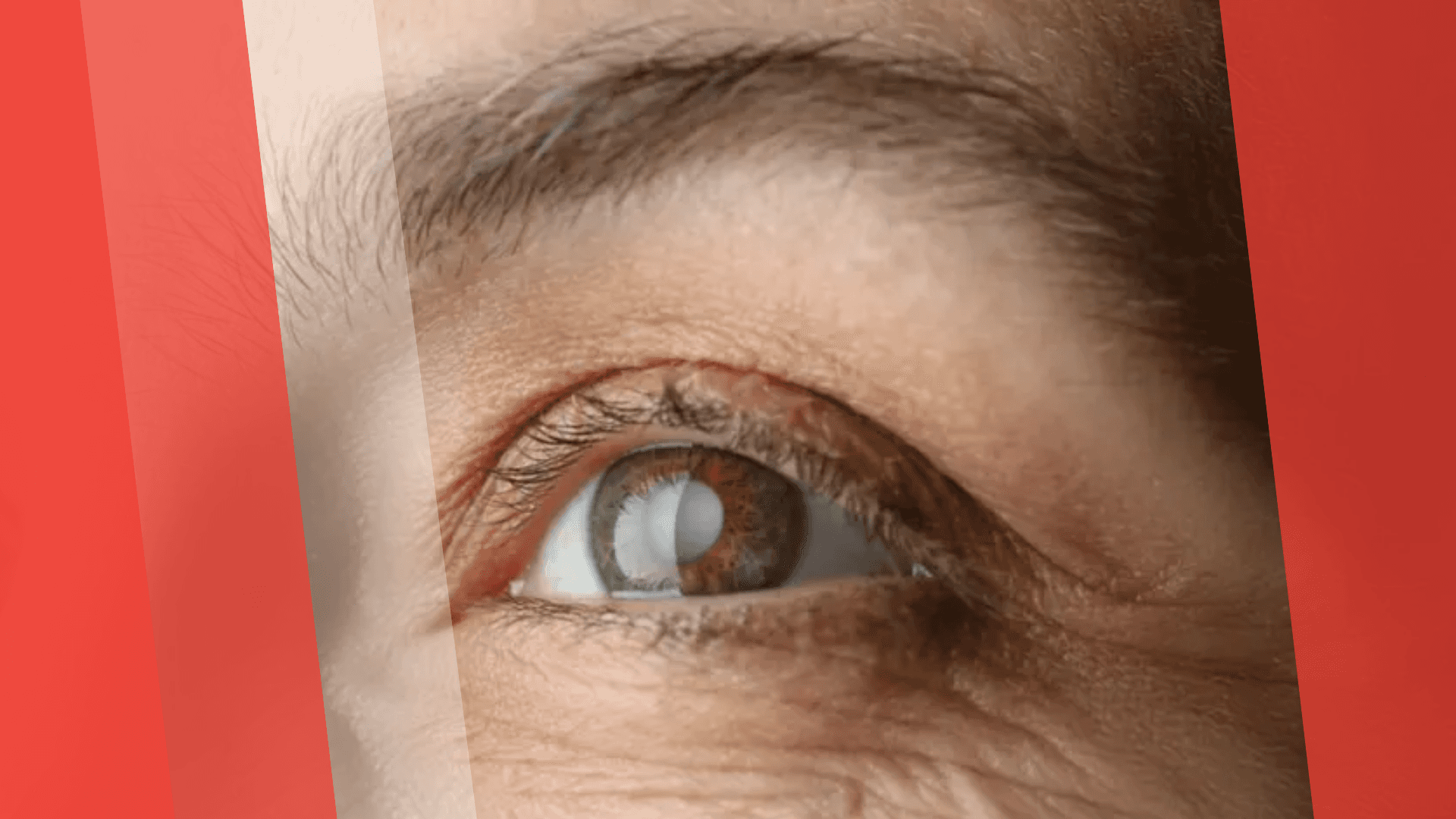
The Most Important Thing to Know: Glaucoma usually has no early warning signs.
Most people notice no pain or changes in vision until permanent damage has already occurred. This is why regular eye screening is so important.
Why Glaucoma Is Called the "Silent Thief of Sight"
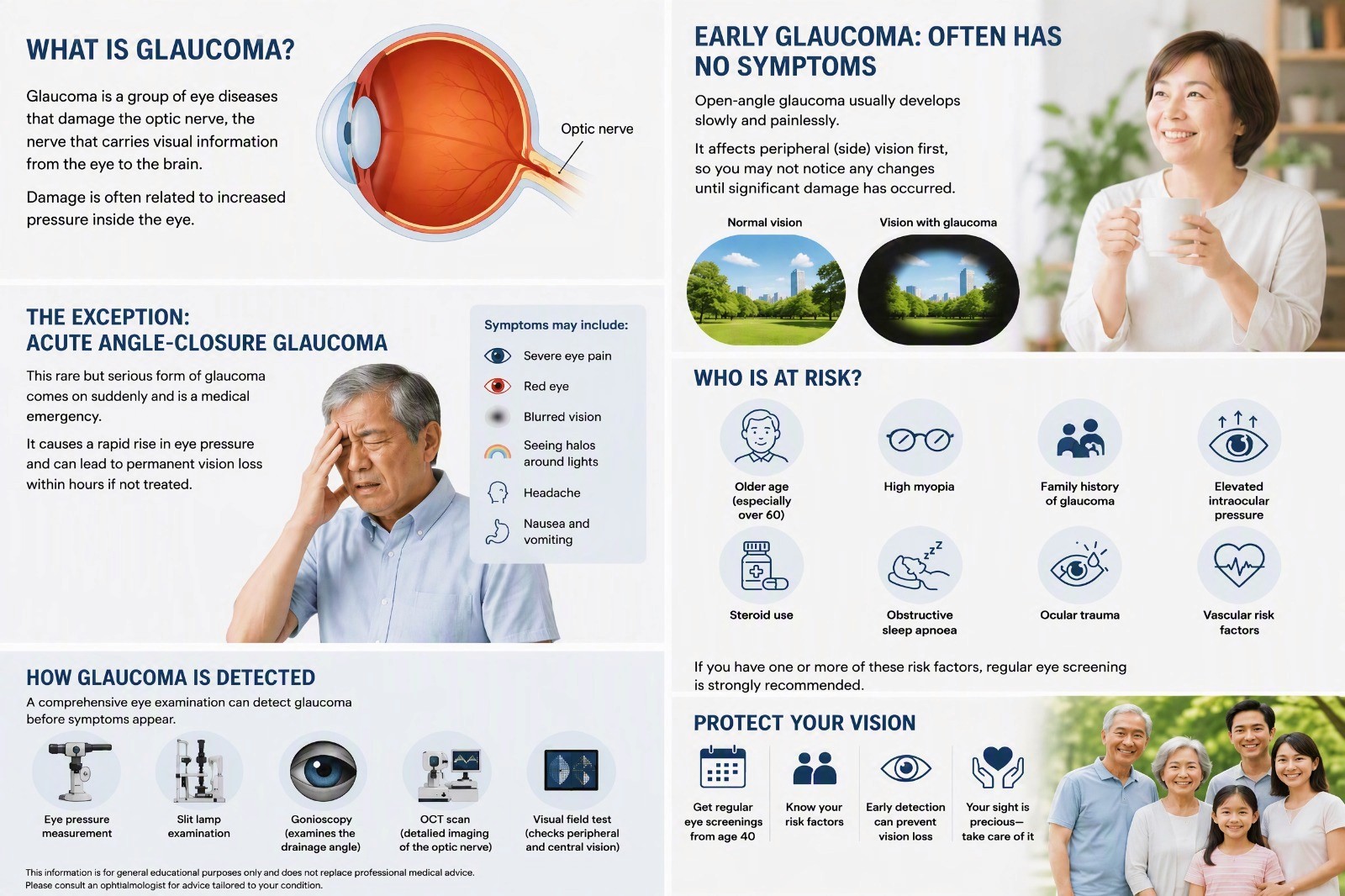
Glaucoma damages the optic nerve, usually due to elevated intraocular pressure (IOP). What makes this condition particularly dangerous is that in most cases, glaucoma does not produce noticeable early symptoms. The most common form, open-angle glaucoma, develops gradually and painlessly, and affects peripheral (side) vision first. Because your brain compensates for gradual peripheral vision loss, you may not realise anything is wrong until significant damage has occurred. By the time you notice vision changes, irreversible damage may have already occurred. The only reliable way to detect glaucoma early is through regular comprehensive eye screening with an ophthalmologist.
Warning Signs You Might Miss
While open-angle glaucoma typically has no symptoms in its earliest stages, some individuals may experience subtle changes that warrant attention:
Gradual loss of peripheral vision: You may notice difficulty seeing objects to the side or above and below your line of sight. This often starts in one eye and may go unnoticed for months or years.
Difficulty adjusting to dark rooms: Slower adaptation when moving from bright to dim environments can sometimes indicate optic nerve (the nerve that connects the eye to the brain) changes.
Mild, intermittent eye discomfort: While open-angle glaucoma is generally painless, some patients report a vague sense of pressure or mild headaches due to increased intraocular pressure.
Tunnel vision (advanced stage): If glaucoma progresses without treatment, peripheral vision narrows significantly, leaving only central vision intact. It is important to understand that these signs often appear only after considerable and irreversible optic nerve damage has already occurred.
Waiting for symptoms is therefore not an effective strategy for glaucoma detection.
Acute Angle-Closure Glaucoma: A Sight-threatening Eye Emergency
Although the most common type of glaucoma (open-angle glaucoma) develops silently, not all forms of glaucoma behave this way. Acute angle-closure glaucoma presents very differently, with sudden and severe symptoms that require urgent medical attention.
An acute angle-closure glaucoma attack is a true eye emergency. Without urgent treatment, it can cause permanent vision loss or even blindness within hours.
This happens when the eye's natural drainage channel suddenly becomes blocked. As a result, the pressure inside the eye rises very quickly. The high pressure can damage the optic nerve and other important structures in the eye.
Symptoms usually come on suddenly and may include:
Severe eye pain
Red eye
Blurred vision
Seeing rainbow-coloured halos around lights
Headache
Nausea and vomiting
People of Asian ancestry, including many Singaporeans, are at a higher risk of developing acute angle-closure glaucoma than people of European ancestry. Studies have also shown that Asians are more likely to experience more severe vision loss if treatment is delayed [1].
If you experience any of these symptoms, seek immediate medical attention. Prompt diagnosis and treatment are essential to lower the eye pressure, relieve symptoms, and give the best chance of preserving vision.
Who Is at Risk?
In Singapore, research suggests that approximately 70% of glaucoma cases remain undiagnosed [2], and half of seniors aged 60 and above had undiagnosed glaucoma [3]. This underscores the importance of proactive screening rather than waiting for symptoms to appear.
Glaucoma is projected to affect more than 110 million people worldwide by 2040 [4], and may also be more common with the following risk factors:
Older Age: Glaucoma risk increases significantly after age 60, with the prevalence rising from 3.5% in those aged 60 to 69 up to 10.9% in those aged above 80 [3].
High myopia: Individuals with high myopia have up to a 4-fold higher risk of developing open-angle glaucoma than those without myopia [5]. Given that Singapore has one of the highest myopia rates globally, this connection is particularly significant.
Family history: Having a first-degree relative with glaucoma increases your risk by 4 to 8 times [6].
Elevated intraocular pressure: Raised pressure inside the eye is the most important treatable risk factor for glaucoma. Lowering eye pressure remains the only proven way to slow glaucoma progression [7].
Steroid use: Steroids are a group of anti-inflammatory drugs, commonly used to treat ocular and systemic conditions. The use of steroids can lead to raised intraocular pressure (IOP) and glaucoma as a potential side effect [8]. Monitoring for raised IOP after prescription of steroids in any form is essential.
Obstructive sleep apnoea: Obstructive sleep apnea (OSA) is a common sleep disorder that often goes undiagnosed. It happens when the upper airway repeatedly becomes blocked or collapses during sleep, causing brief pauses in breathing. As a result, oxygen levels in the body can drop repeatedly, and the person may briefly wake up or partially wake without realising it. People with obstructive sleep apnea (OSA) may have a higher risk of developing glaucoma [4].
Ocular trauma: Traumatic glaucoma is a type of glaucoma that can develop after an injury to the eye, whether from a blunt impact (such as being hit by an object) or a penetrating injury that causes a wound to the eye. An eye injury can cause the eye pressure to rise through different mechanisms. If the raised eye pressure is not treated appropriately, it can damage the optic nerve and lead to permanent loss of vision [9].
Vascular risk factors: Several conditions that affect blood flow throughout the body have been linked to normal-tension glaucoma, including high or low blood pressure, diabetes, migraine, peripheral vascular disease, Raynaud’s syndrome, and anaemia [10]. These conditions may affect the blood supply to the optic nerve, which can contribute to glaucoma even when eye pressure is within the normal range.
If you fall into one or more of these risk categories, regular eye screening at IECRC is strongly recommended.
How Glaucoma Is Detected Before Symptoms Appear
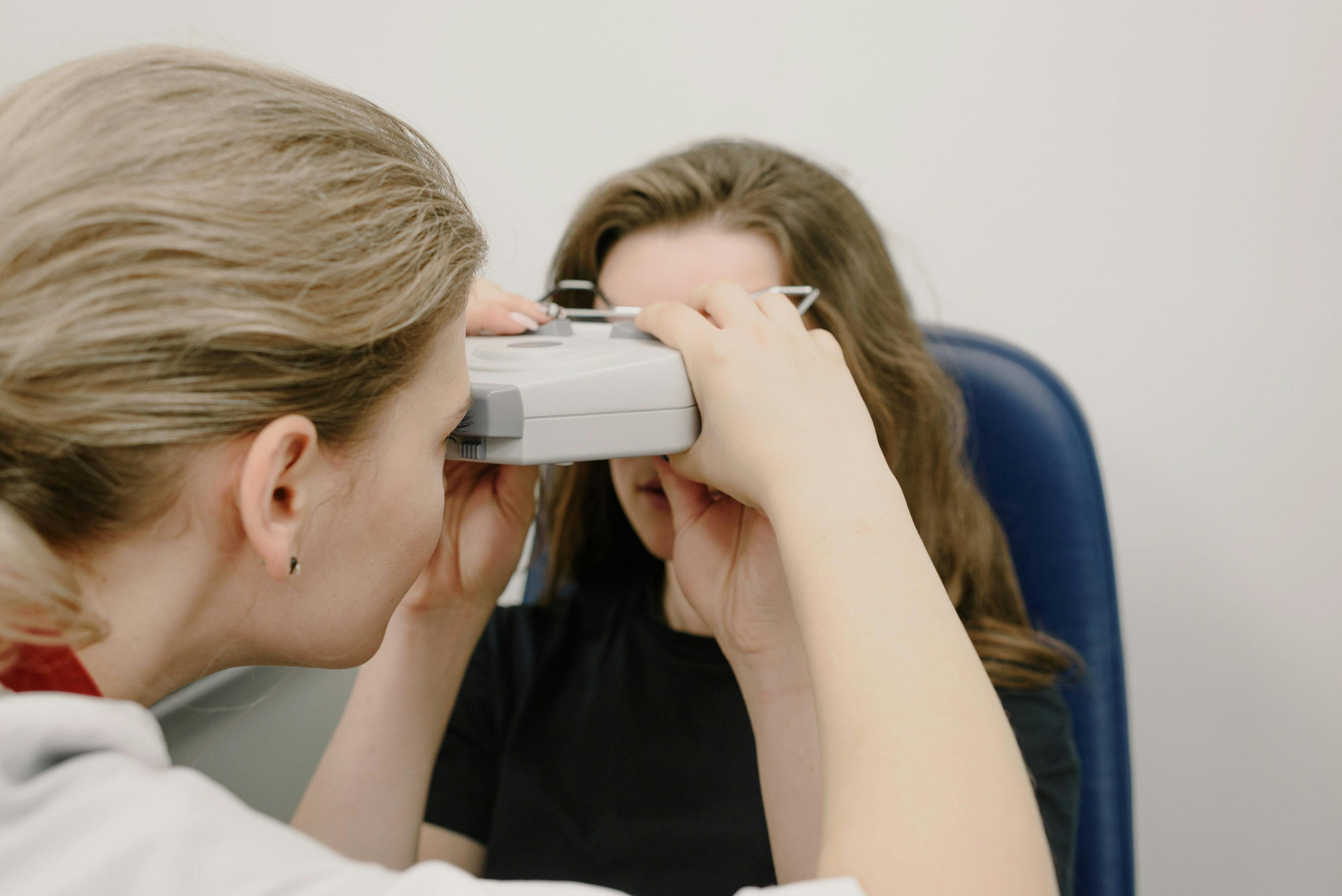
A comprehensive glaucoma assessment involves several tests that can detect the condition well before any symptoms develop:
Tonometry: Measures your intraocular pressure.
Slit lamp examination and fundus photography: Examines the optic nerve for signs of damage.
Optical coherence tomography (OCT): Provides detailed cross-sectional imaging of the optic nerve and retinal nerve fibre layer.
Visual field testing (perimetry): Assesses your peripheral and central vision to identify blind spots.
Gonioscopy: Uses a special lens after numbing eye drops to examine the drainage angle of the eye.
At IECRC, our glaucoma specialists use a combination of these diagnostic tools. Treatment options range from medicated eye drops and glaucoma lasers and surgery. Learn more about our ophthalmologists.
Frequently Asked Questions
Can glaucoma be cured?
Glaucoma cannot currently be cured, and any vision already lost cannot be restored. However, with early detection and appropriate treatment (including medicated eye drops, laser therapy, or surgery) further vision loss can be significantly slowed or halted.
How often should I be screened for glaucoma?
Most adults should consider a comprehensive baseline eye screening from age 40. Those with higher risk factors, such as a family history of glaucoma, high myopia, diabetes or high blood pressure may need to be screened at a younger age or more frequently [11]. For those above 60, yearly eye examinations may be generally recommended [12].
References:
[1] Chan PP, Zhang X, Aung T, et al. Controversies, consensuses, and guidelines for acute primary angle closure attack (APACA) by the Asia-Pacific Glaucoma Society (APGS) and the Academy of Asia-Pacific Professors of Ophthalmology (AAPPO). Asia Pac J Ophthalmol (Phila). Nov-Dec 2025;14(6):100223. doi:10.1016/j.apjo.2025.100223
[2] Chua J, Baskaran M, Ong PG, et al. Prevalence, Risk Factors, and Visual Features of Undiagnosed Glaucoma: The Singapore Epidemiology of Eye Diseases Study. JAMA Ophthalmol. Aug 2015;133(8):938-46. doi:10.1001/jamaophthalmol.2015.1478
[3] Yee H, Wong CMJ, Gupta P, et al. Prevalence, Risk Determinants, and Burden of Undiagnosed Age-Related Eye Diseases Among Older Asian Adults. JAMA Ophthalmol. Jan 1 2026;144(1):23-32. doi:10.1001/jamaophthalmol.2025.4623
[4] Tham YC, Li X, Wong TY, Quigley HA, Aung T, Cheng CY. Global prevalence of glaucoma and projections of glaucoma burden through 2040: a systematic review and meta-analysis. Ophthalmology. Nov 2014;121(11):2081-90. doi:10.1016/j.ophtha.2014.05.013
[5] Ha A, Kim CY, Shim SR, Chang IB, Kim YK. Degree of Myopia and Glaucoma Risk: A Dose-Response Meta-analysis. Am J Ophthalmol. Apr 2022;236:107-119. doi:10.1016/j.ajo.2021.10.007
[6] Kong X, Chen Y, Chen X, Sun X. Influence of family history as a risk factor on primary angle closure and primary open angle glaucoma in a Chinese population. Ophthalmic Epidemiol. Oct 2011;18(5):226-32. doi:10.3109/09286586.2011.595040
[7] Asrani SG, McGlumphy EJ, Al-Aswad LA, et al. The relationship between intraocular pressure and glaucoma: An evolving concept. Prog Retin Eye Res. Nov 2024;103:101303. doi:10.1016/j.preteyeres.2024.101303
[8] Phulke S, Kaushik S, Kaur S, Pandav SS. Steroid-induced Glaucoma: An Avoidable Irreversible Blindness. J Curr Glaucoma Pract. May-Aug 2017;11(2):67-72. doi:10.5005/jp-journals-l0028-1226
[9] Ng JK, Kaur K. Traumatic Glaucoma. StatPearls. 2026.
[10] Funk RO, Hodge DO, Kohli D, Roddy GW. Multiple Systemic Vascular Risk Factors Are Associated With Low-Tension Glaucoma. J Glaucoma. Jan 1 2022;31(1):15-22. doi:10.1097/IJG.0000000000001964
[11] Gunzenhauser R, Coleman AL. Glaucoma Screening Guidelines Worldwide. J Glaucoma. Aug 1 2024;33(Suppl 1):S9-S12. doi:10.1097/IJG.0000000000002362
[12] Cheng L KH. Eye screenings among Singaporeans aged 40-60 years: formative research based on the theory of planned behaviour. Singapore Med J. Jun 2023;64(6):403-406. doi:10.11622/smedj.2021099. PMID: 34544208
Disclaimer: This article is for general informational purposes only and does not constitute personal medical advice. Please consult an ophthalmologist for guidance specific to your condition.