
YAG Laser Posterior Capsulotomy
YAG laser posterior capsulotomy is a brief outpatient procedure that restores clear vision when cloudiness develops behind an artificial lens after cataract surgery. This common condition, called posterior capsule opacification, can occur months or years after successful cataract surgery.
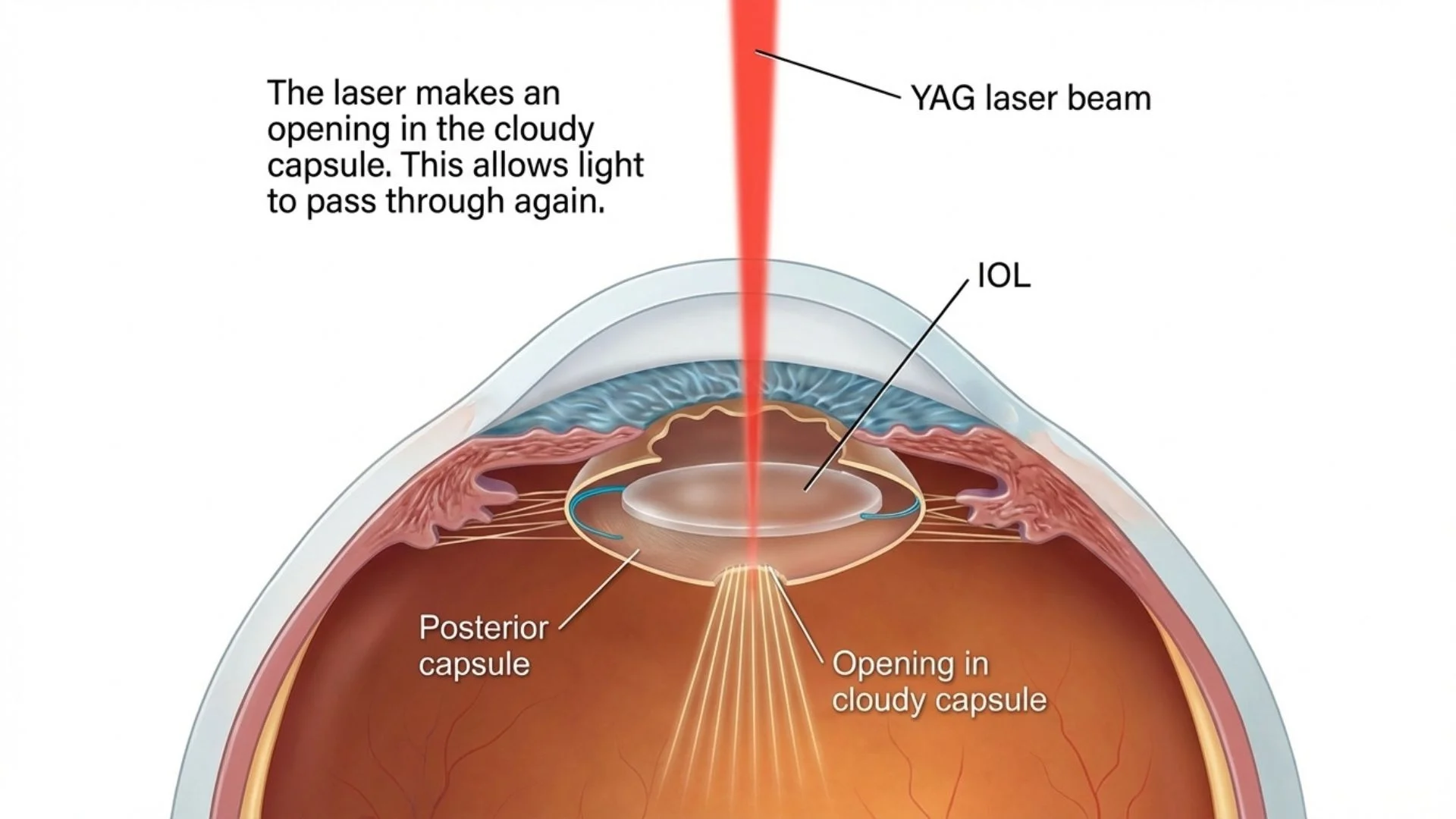
Understanding Posterior Capsule Opacification
During cataract surgery, the clouded natural lens is removed while the thin capsule surrounding it is left in place to support the new artificial lens. Over time, cells may grow across this capsule, causing it to become hazy. The National Eye Institute notes that this occurs in approximately 20-40% of patients within five years of cataract surgery.
Symptoms are often similar to the original cataract:
Gradual blurring of vision
Glare or halos around lights
Difficulty reading or seeing fine details
Reduced contrast sensitivity
The Procedure
YAG laser capsulotomy uses a precisely focused laser to create a small opening in the clouded capsule, allowing light to pass through clearly again.
Performed at the slit lamp in the clinic
Takes approximately 5-10 minutes
No incisions or injections required
Anaesthetic eye drops provide comfort
You remain seated and awake throughout
The American Academy of Ophthalmology provides detailed information about what patients can expect during this procedure.
What to Expect Afterwards
Most patients notice improved vision within hours to days. The cloudiness cannot return once the capsule has been opened, so this is typically a one-time treatment.
You may notice floaters temporarily after the procedure-these usually settle within a few weeks.
Potential Risks
While YAG capsulotomy is generally safe, patients should be aware of potential risks:
Floaters are common initially and usually temporary
Temporary increase in eye pressure may occur and is monitored after the procedure
Retinal detachment is a rare but serious complication (less than 1-2%), with higher risk in patients who are highly short-sighted
Inflammation is typically mild and managed with eye drops
Damage to the artificial lens is uncommon with modern techniques
Your ophthalmologist will discuss your individual risk factors, particularly if you have a history of retinal problems or high myopia.
Medical Disclaimer: This information provides general guidance about YAG laser capsulotomy and should not replace professional medical advice. Individual outcomes depend on various factors including your eye health and the characteristics of the capsule opacification. Please consult with our ophthalmologists for assessment and recommendations specific to your situation.
Pre-Operative Care
No special preparation is typically required
Continue your regular medications unless advised otherwise
Arrange transportation as your pupils will be dilated
The procedure is performed in the clinic-no fasting necessary
Inform your doctor if you have had any retinal problems
Post-Operative Care
Seek immediate attention if you experience: Sudden increase in floaters, flashing lights, a shadow or curtain across your vision, or severe pain-these may indicate retinal detachment.