Transscleral Cyclophotocoagulation
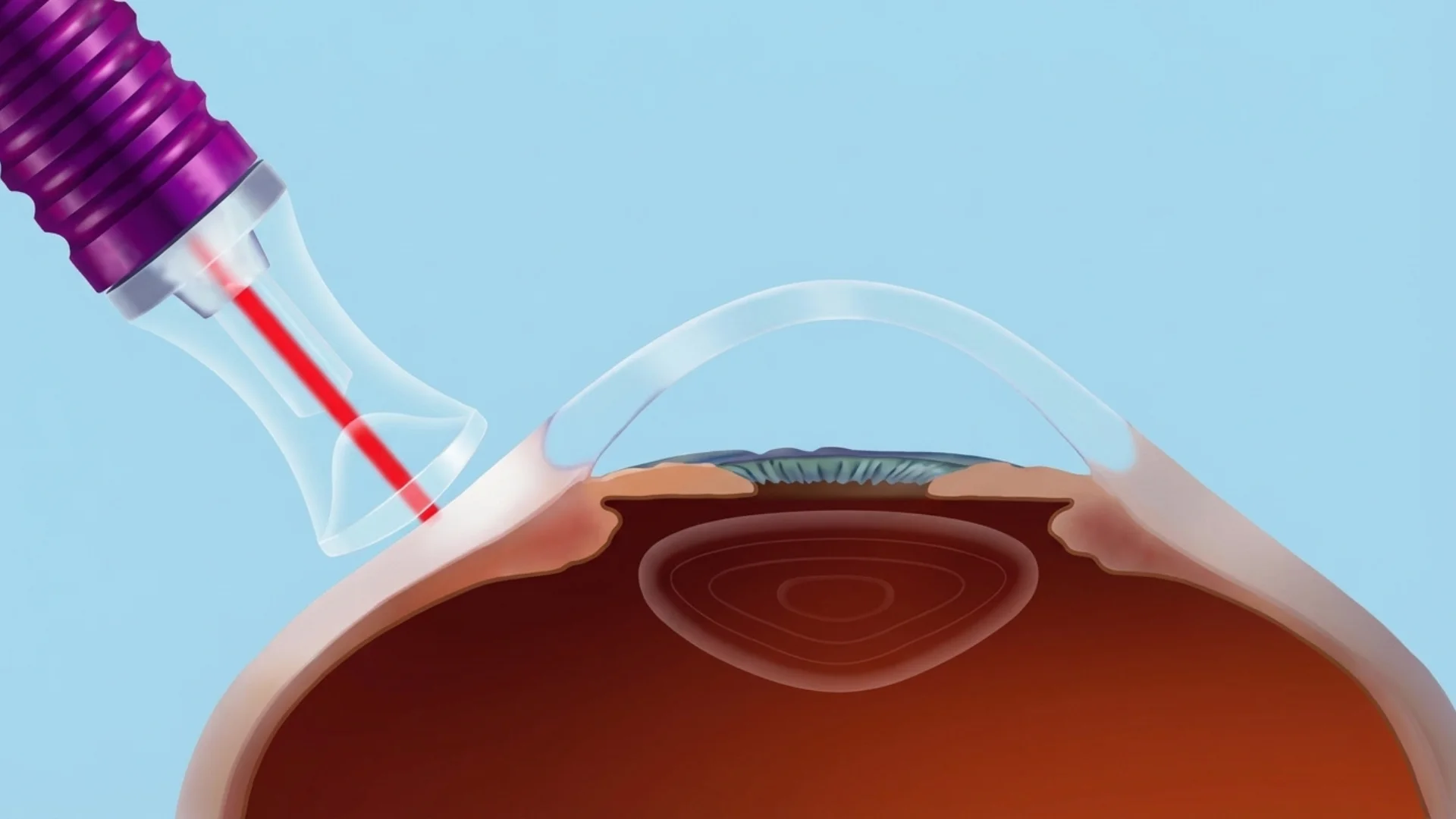
Transscleral cyclophotocoagulation is a laser procedure that lowers eye pressure by reducing the production of fluid within the eye. This treatment is typically reserved for patients with glaucoma that has not responded adequately to other treatments.
Understanding the Procedure
The eye's ciliary body continuously produces the fluid (aqueous humour) that maintains eye pressure. In cyclophotocoagulation, laser energy is applied through the white of the eye (sclera) to partially reduce the activity of the ciliary body, thereby decreasing fluid production and lowering pressure.
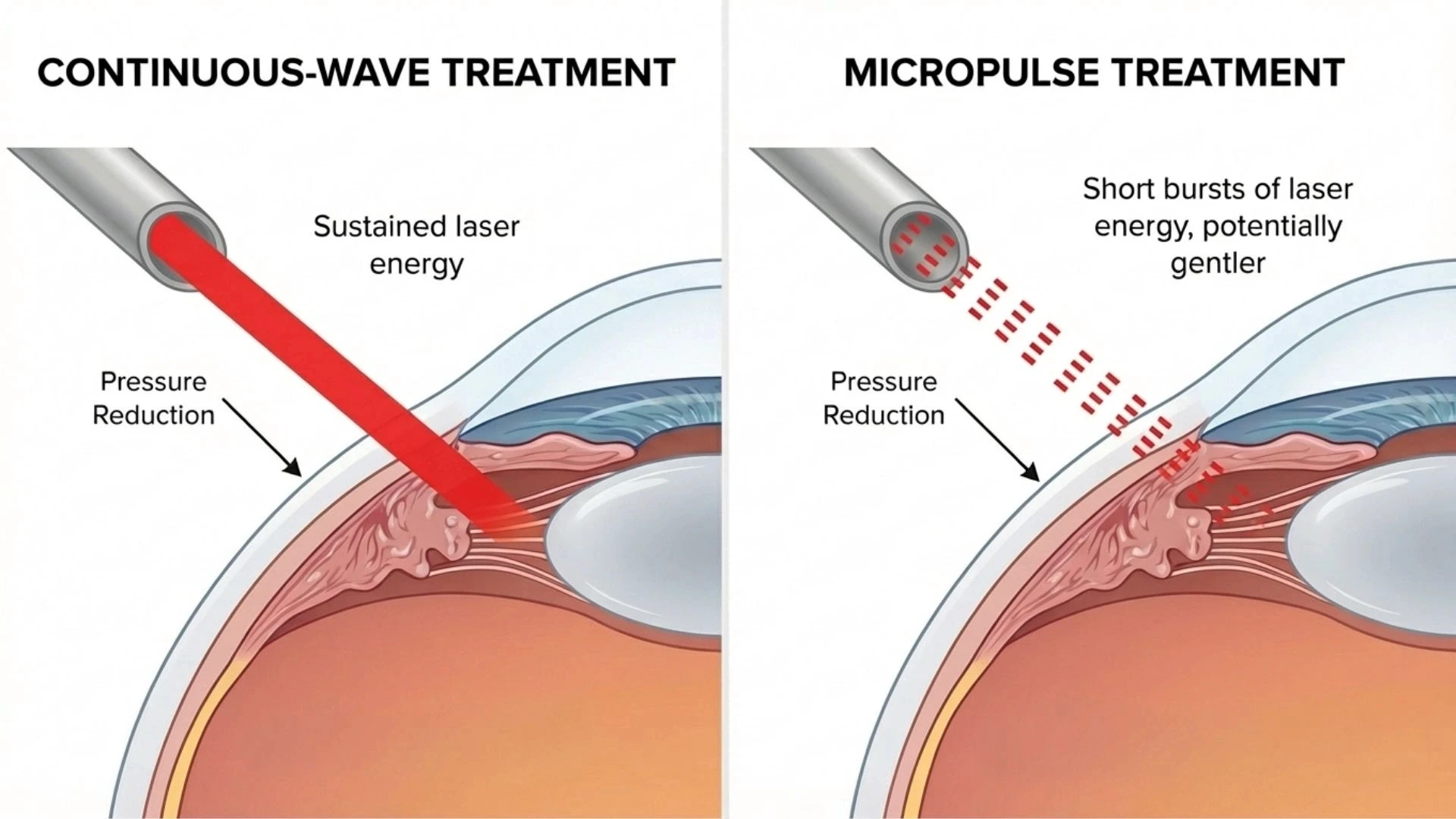
Two main approaches are used:
Continuous-wave treatment delivers sustained laser energy and has been used for many years.
Micropulse treatment delivers laser energy in very short bursts, which may offer a gentler approach with fewer side effects while still achieving pressure reduction.
Who May Benefit
Cyclophotocoagulation is generally considered when other treatments have been insufficient:
Refractory glaucoma uncontrolled despite maximum medication and previous surgery
Eyes with limited vision where controlling pressure and discomfort is the primary goal
Patients unsuitable for incisional surgery due to other health conditions
Neovascular glaucoma where abnormal blood vessels complicate other surgical options
Following failed filtration surgery when additional pressure lowering is needed
The American Academy of Ophthalmology provides detailed clinical information about this procedure and its applications.
The Procedure
Cyclophotocoagulation is typically performed as an outpatient procedure:
Local anaesthetic is administered around the eye
A probe is placed against the outer surface of the eye
Laser applications are delivered around the circumference of the eye
The procedure takes approximately 20-30 minutes
You may feel pressure but should not experience significant pain during treatment
What Results Can Be Expected
Cyclophotocoagulation can achieve meaningful pressure reduction in many patients with difficult-to-control glaucoma. However, expectations should be realistic:
Eye pressure typically reduces by 30-40%
Multiple treatments may be necessary
The procedure aims to stabilise the condition rather than restore lost vision
Results may diminish over time, requiring retreatment
The goal is to prevent further vision loss and, in some cases, to reduce pain associated with very high eye pressure.
Potential Risks
As a treatment for advanced glaucoma, cyclophotocoagulation carries more significant risks than some other laser procedures:
Pain and inflammation are common after treatment and require medication
Temporary or prolonged low eye pressure can occur
Vision reduction may occur, sometimes permanently
Cataract progression if the natural lens is still present
Need for retreatment is common
Rare serious complications include severe vision loss or shrinkage of the eye (phthisis)
Micropulse techniques have shown a more favourable safety profile compared to traditional continuous-wave treatment.
Medical Disclaimer: This information provides general guidance about transscleral cyclophotocoagulation and should not replace professional medical advice. This procedure is typically reserved for advanced or refractory glaucoma and carries meaningful risks that must be weighed against the benefits. Your ophthalmologist will discuss whether this treatment is appropriate for your specific situation and what outcomes you can realistically expect.
Pre-Operative Care
Complete all pre-operative assessments as scheduled
Discuss all your medications with your surgeon, especially blood thinners
Arrange for someone to accompany you home
You may be asked to fast for several hours before the procedure
Arrange time off work (typically several days to one week)
Prepare for a more intensive recovery than other laser procedures
Post-Operative Care
Seek immediate attention if you experience: Severe pain not controlled by prescribed medication, sudden significant vision loss, or signs of infection.