Refractive Surgery
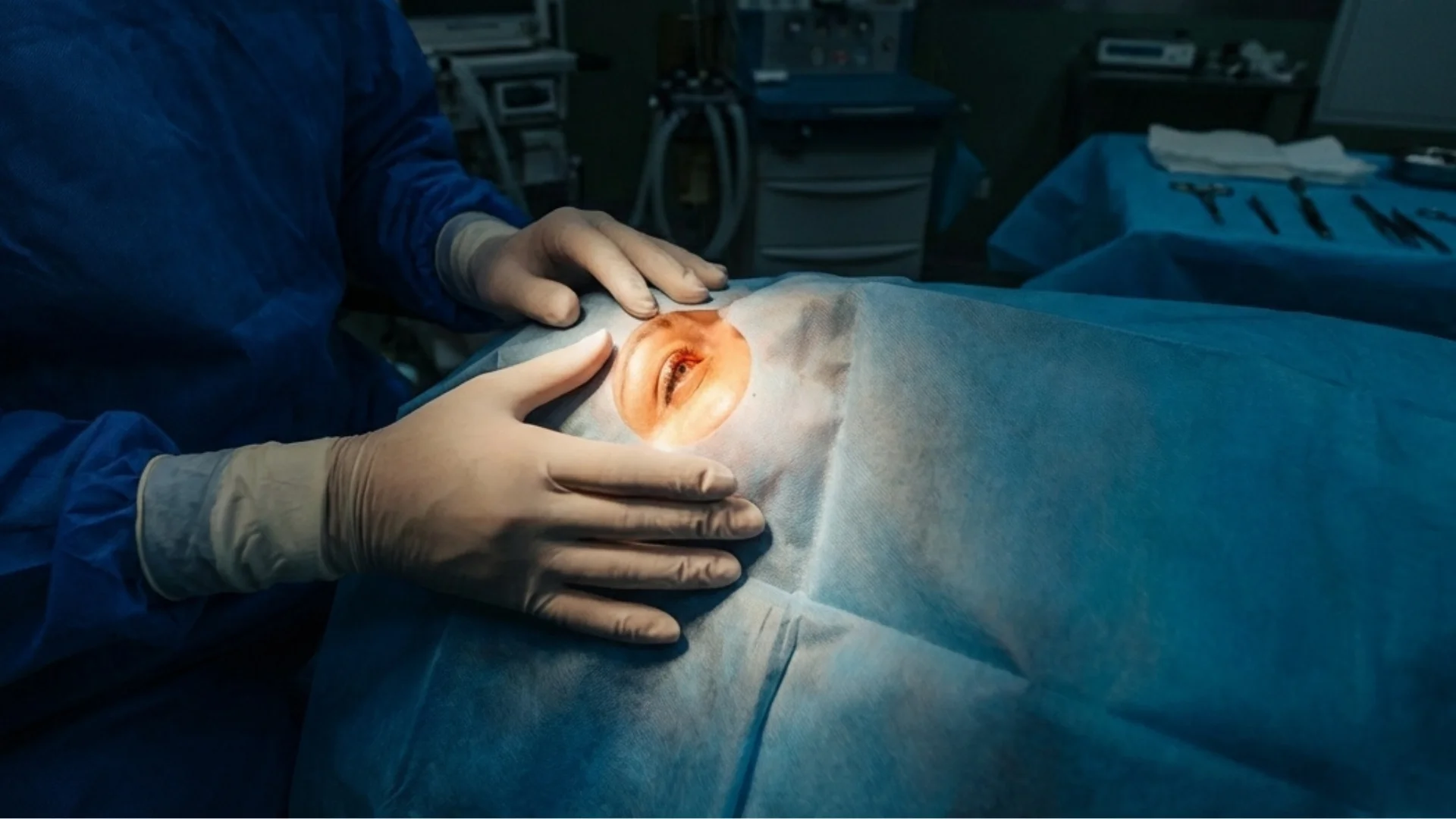
Refractive surgery encompasses procedures designed to reduce dependence on spectacles or contact lenses by correcting how light focuses in the eye. Beyond laser vision correction, several surgical options exist for patients who may not be suitable for corneal laser procedures.
Understanding Refractive Errors
The eye focuses light onto the retina much like a camera focuses light onto film. When this focusing system is imperfect, vision is blurred:
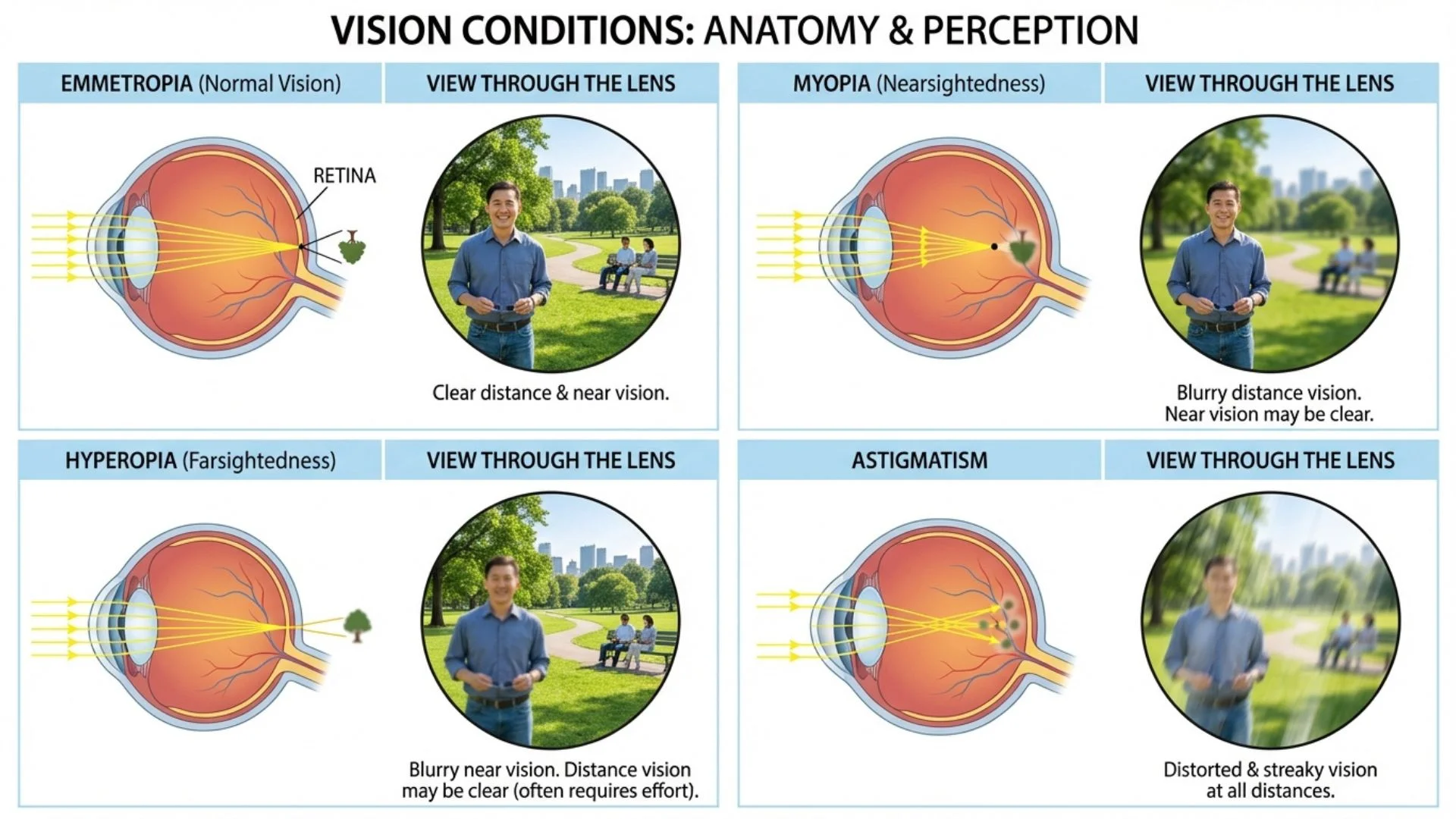
Myopia (short-sightedness): Distant objects appear blurry
Hyperopia (long-sightedness): Near objects may be blurry; eye strain is common
Astigmatism: Vision is distorted at all distances due to irregular corneal curvature
Presbyopia: Age-related difficulty focusing on near objects, typically after age 40
Surgical Options
Implantable Contact Lenses (ICL/Phakic IOL)
For patients with high refractive errors or thin corneas unsuitable for laser surgery, an artificial lens can be implanted inside the eye while keeping the natural lens in place.
Suitable for high myopia (beyond the range of LASIK)
Reversible-the lens can be removed if needed
Does not alter the cornea
Requires adequate space inside the eye
Refractive Lens Exchange
Replacing the eye's natural lens with an artificial lens of calculated power can correct refractive errors, similar to cataract surgery but performed before a cataract develops.
May be considered for patients with early lens changes
Can address presbyopia with multifocal or extended depth of focus lenses
Permanent and not reversible
May be preferred for patients over 50 approaching cataract age
The American Academy of Ophthalmology provides information about various refractive surgery options.
Who May Be Suitable
Candidacy depends on the specific procedure:
ICL: Typically for patients aged 21-45 with high myopia (-3 to -20 dioptres) or hyperopia, adequate anterior chamber depth, and healthy eyes
Refractive Lens Exchange: Often considered for patients over 50, those with early lens changes, or when corneal procedures are not suitable
A comprehensive evaluation including detailed eye measurements is essential to determine which approach, if any, is appropriate.
What Results Can Be Expected
Both procedures can achieve significant reduction in spectacle dependence:
Most patients achieve functional vision for daily activities
Results are generally stable long-term
Some patients may still need glasses for certain tasks
With lens-based procedures, cataract will not develop in that eye (as the natural lens has been replaced or supplemented)
Research published in peer-reviewed journals demonstrates high satisfaction rates with modern refractive surgery techniques when patients are appropriately selected.
Potential Risks
Implantable Contact Lens risks:
Cataract development (risk increases over time)
Elevated eye pressure
Inflammation
Need for lens removal or exchange
Glare or halos, particularly at night
Refractive Lens Exchange risks:
Similar to cataract surgery: infection, bleeding, retinal detachment
Loss of accommodation (ability to focus at different distances) if not using a multifocal lens
Visual phenomena with multifocal lenses (halos, glare)
Need for spectacles for some activities
All intraocular procedures carry a small risk of serious complications including infection and vision loss.
Recovery timeline: Visual recovery is typically rapid, with most patients noticing significant improvement within days. Final results stabilise over several weeks.
Medical Disclaimer: This information provides general guidance about refractive surgery options and should not replace professional medical advice. Not everyone is a suitable candidate for these procedures, and individual outcomes vary. All surgical procedures carry risks that must be carefully considered. Please consult with our ophthalmologists for a thorough evaluation and discussion of options appropriate for your specific circumstances.
Pre-Operative Care
Complete comprehensive eye examination and measurements
Discontinue contact lenses as advised (typically 1-2 weeks for soft lenses, longer for rigid)
Discuss your visual needs and expectations thoroughly
Understand the specific risks of your recommended procedure
Arrange transportation and time off work
Follow fasting instructions if sedation will be used
Post-Operative Care
Seek immediate attention if you experience: Severe pain, sudden vision loss, increasing redness, or any other concerning symptoms.