Incision and Drainage for Chalazion
Incision and drainage is a minor surgical procedure to remove a chalazion-a firm lump in the eyelid caused by a blocked oil gland. This procedure provides rapid relief when conservative treatments have not resolved the chalazion.
Understanding Chalazion
A chalazion develops when a meibomian gland in the eyelid becomes blocked. Unlike a stye (which is an acute infection), a chalazion is typically:
A painless or mildly tender lump
Firm and round
Located within the eyelid rather than at the lid margin
Slow to develop over weeks
While many chalazia eventually resolve on their own, some persist and require surgical drainage. Persistent chalazia can cause:
Cosmetic concern from visible swelling
Blurred vision if large enough to press on the eye
Discomfort or heaviness in the eyelid
Interference with contact lens wear
When Surgery Is Recommended
Incision and drainage may be advised when:
The chalazion has not responded to conservative treatment (warm compresses, lid hygiene) for 4-6 weeks
The lump is large enough to affect vision or cause significant symptoms
There is concern about the diagnosis requiring tissue examination
A chalazion recurs repeatedly in the same location (biopsy may be indicated)
The American Academy of Ophthalmology provides detailed information about chalazion and treatment options.
The Procedure
Incision and drainage is a brief office procedure:
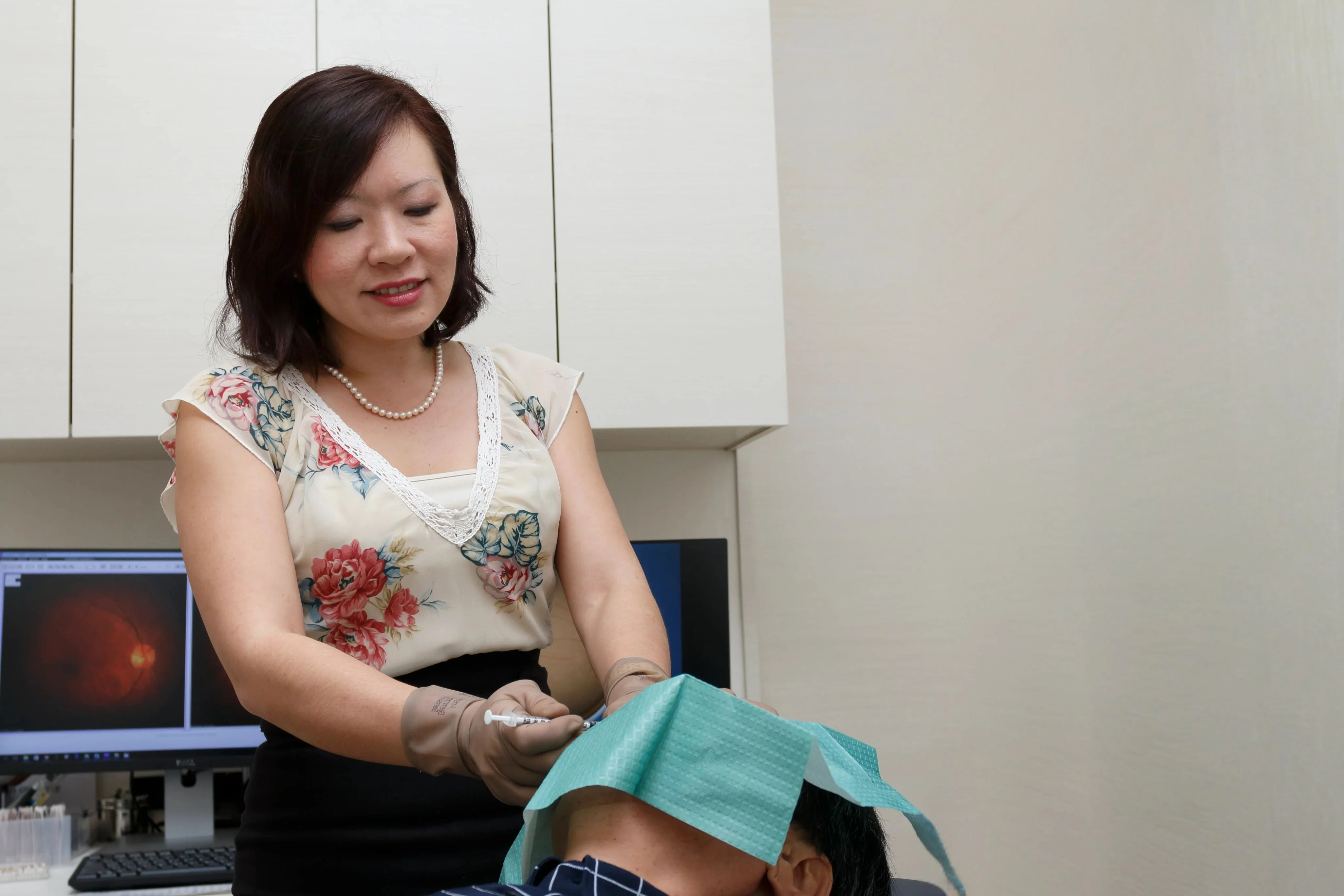
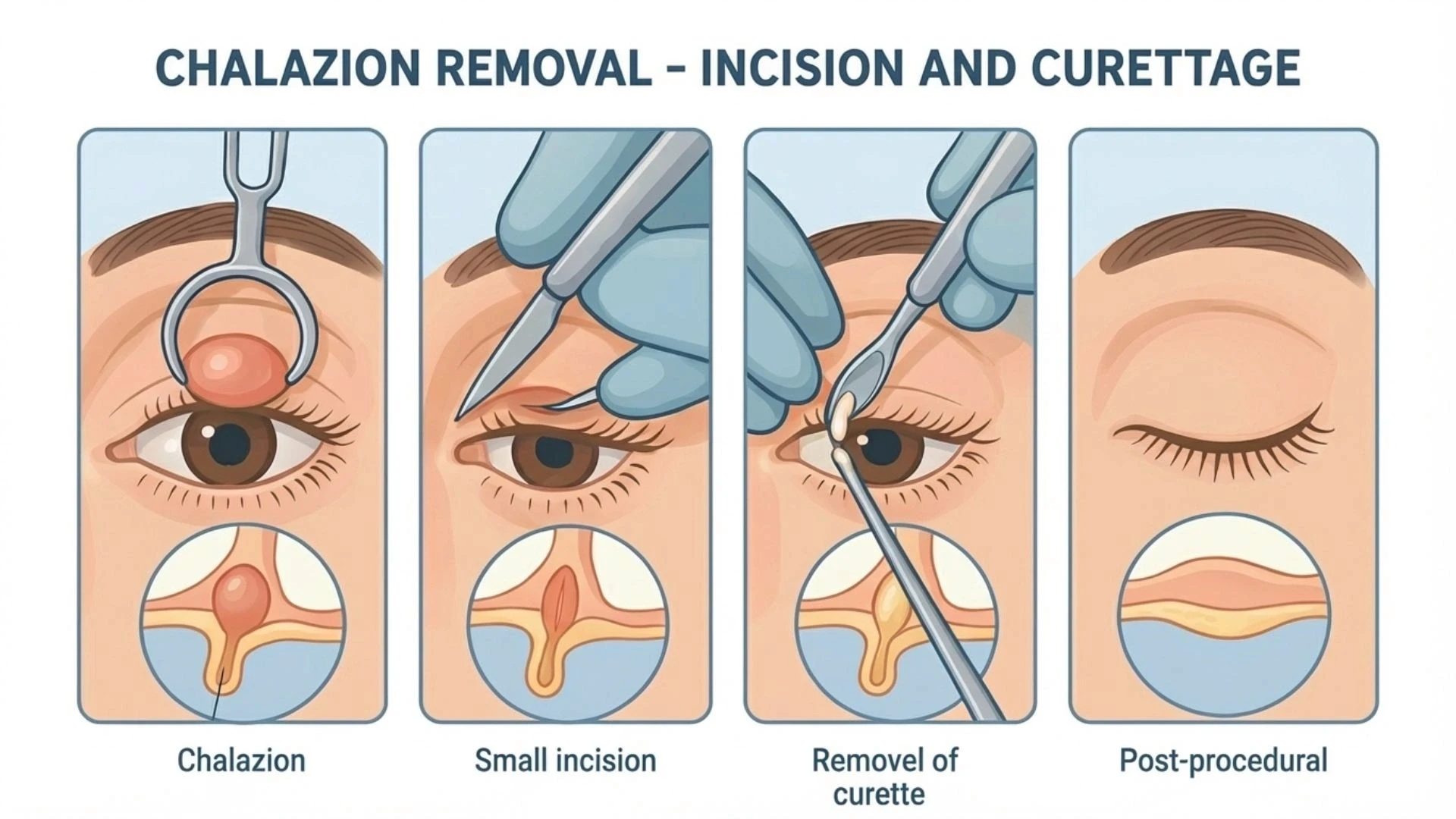
Local anaesthetic is injected to numb the eyelid
A small clamp holds the eyelid in position
An incision is made on the inner surface of the eyelid (avoiding visible scarring)
The contents of the chalazion are drained and the lining is removed
The procedure takes approximately 10-15 minutes
Sutures are rarely needed for the internal incision
For chalazia pointing outward through the skin, an external approach may occasionally be used.
What Results Can Be Expected
Surgical drainage typically provides:
Immediate reduction in the size of the lump
Complete resolution in most cases
Relief of any pressure-related symptoms
Success rates are high, with complete resolution in 80-95% of cases after a single procedure.
Recurrence occurs in 5-20% of cases, particularly if underlying blepharitis or meibomian gland dysfunction is not addressed.
Potential Risks
Incision and drainage is generally safe:
Bruising and swelling are common and resolve over 1-2 weeks
Mild discomfort after the anaesthetic wears off
Recurrence is possible if the lining is not completely removed
Infection is uncommon when proper technique is used
Scarring is rare with internal incisions; possible with external approach
Eyelid notching is uncommon
Bleeding is usually minor
Preventing future chalazia: Daily lid hygiene with warm compresses and gentle cleaning can help prevent recurrence by keeping the meibomian glands clear.
Medical Disclaimer: This information provides general guidance about incision and drainage for chalazion and should not replace professional medical advice. If a chalazion recurs repeatedly in the same location, further investigation may be needed to exclude other conditions. Please consult with our ophthalmologists for assessment and treatment recommendations.
Pre-Operative Care
No special preparation is typically required
Continue regular medications unless advised otherwise
Warm compresses before the appointment may help soften the contents
Inform your doctor if you take blood-thinning medications
The procedure is performed in the clinic-no fasting needed
Arrange transportation if you prefer not to drive afterwards
Post-Operative Care
Seek attention if you experience: Increasing pain, significant swelling, fever, or signs of spreading infection.