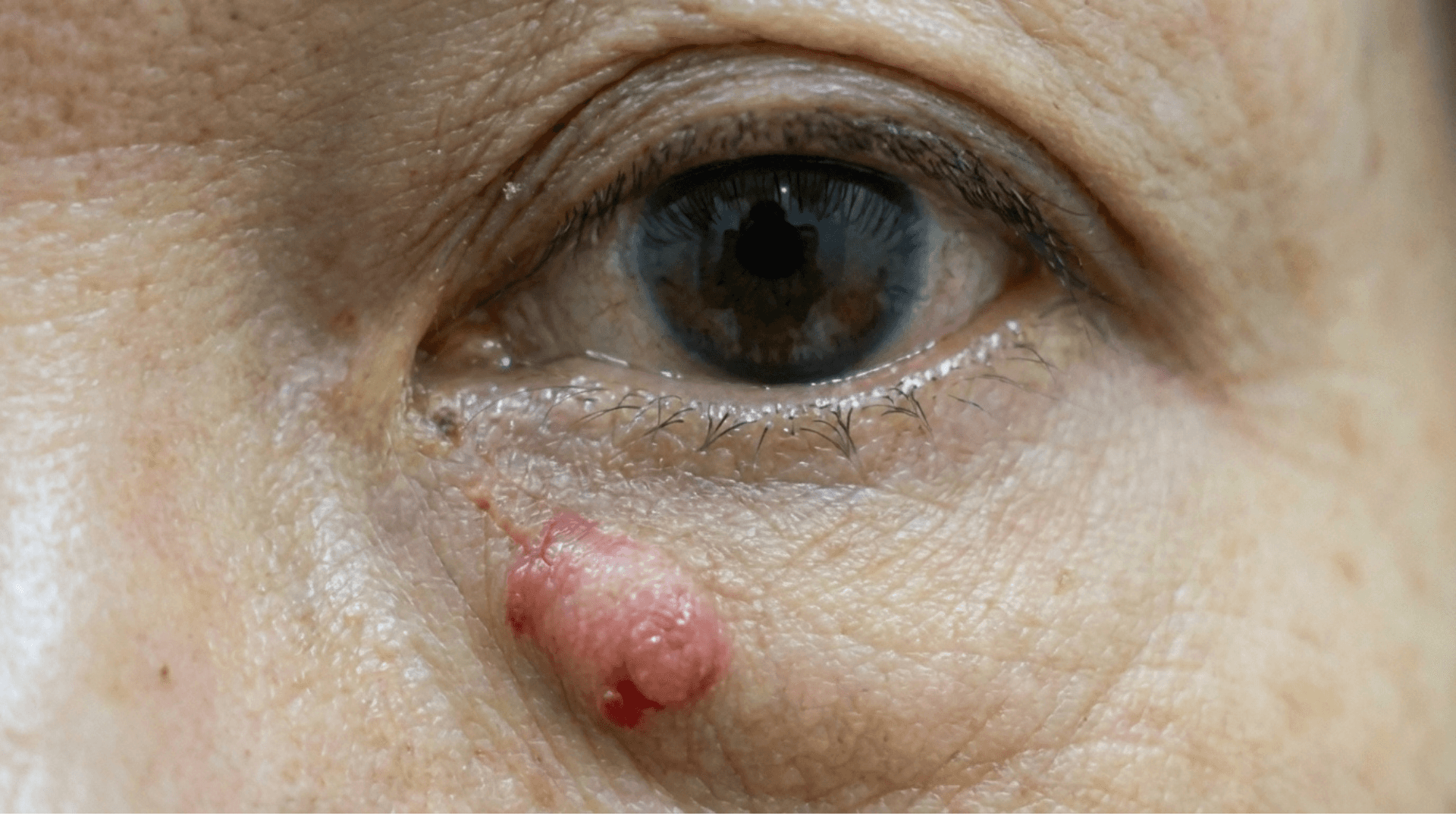
Excisional Biopsy for Eyelid Lesions
Excisional biopsy is a procedure to completely remove a growth or lesion from the eyelid for both treatment and microscopic examination. This approach ensures accurate diagnosis while often providing definitive treatment in a single procedure.
Why Biopsy Is Important
Many types of lumps and bumps can develop on the eyelids. While most are benign (non-cancerous), some may be precancerous or malignant. Because the eyelids receive significant sun exposure and have unique tissue characteristics, several types of skin cancer can occur in this area.
Common benign lesions include:
Papillomas (skin tags)
Seborrhoeic keratoses
Cysts
Moles (naevi)
Lesions requiring careful evaluation include:
Basal cell carcinoma (the most common eyelid cancer)
Squamous cell carcinoma
Sebaceous cell carcinoma
Melanoma (rare)
The American Academy of Ophthalmology emphasises the importance of proper evaluation of eyelid lesions.
When Excision Is Recommended
Your ophthalmologist may recommend excisional biopsy when:
A lesion has features suspicious for malignancy
A growth is changing in size, shape, or colour
There is loss of eyelashes in the area
The lesion bleeds easily or does not heal
A persistent lesion causes symptoms (irritation, discomfort)
Definitive diagnosis is needed
The lesion is cosmetically bothersome
Warning signs that warrant prompt evaluation:
Pearly, shiny, or waxy appearance
Irregular borders
Ulceration that does not heal
Loss of normal eyelid architecture
Recurrent "chalazion" in the same location
The Procedure
Excisional biopsy is typically performed as an office procedure:
Local anaesthetic numbs the eyelid
The lesion is removed completely with a margin of normal tissue
The wound is closed with fine sutures placed in natural skin creases
The specimen is sent for pathological examination
The procedure takes 20-45 minutes depending on size and location
For suspected malignancies, wider margins may be taken. Complex cases may require specialised techniques or reconstruction.
What Results Can Be Expected
Diagnostic accuracy: Pathological examination provides definitive diagnosis.
Treatment outcomes:
Most benign lesions are cured with complete excision
For malignant lesions, outcomes depend on the type and whether margins are clear
Basal cell carcinoma has excellent cure rates when completely removed
Further treatment may be needed if margins are involved or for aggressive tumour types
Results of the pathology examination are typically available within 1-2 weeks.
Potential Risks
Bruising and swelling are expected and resolve over 1-2 weeks
Scarring is usually minimal when incisions follow natural creases
Infection is uncommon with proper wound care
Incomplete excision may require additional surgery
Eyelid notching or asymmetry is possible depending on lesion size
Temporary difficulty closing the eye may occur with larger excisions
Recurrence is possible, particularly for some types of malignancy
After receiving results: Your doctor will discuss the findings and whether any additional treatment or monitoring is needed.
Medical Disclaimer: This information provides general guidance about excisional biopsy for eyelid lesions and should not replace professional medical advice. Any new or changing eyelid lesion should be evaluated by an eye care professional. Outcomes depend on the nature of the lesion and individual factors. If malignancy is confirmed, additional treatment and surveillance may be required. Please consult with our ophthalmologists for proper evaluation of any concerning eyelid growth.
Pre-Operative Care
Discuss all medications, especially blood thinners and aspirin, with your surgeon
You may be asked to stop certain medications before surgery
No fasting is typically required for local anaesthesia
Arrange transportation home
Photography will be taken for medical records
Post-Operative Care
Seek prompt attention if you experience: Increasing pain, spreading redness, fever, wound separation, or signs of infection.