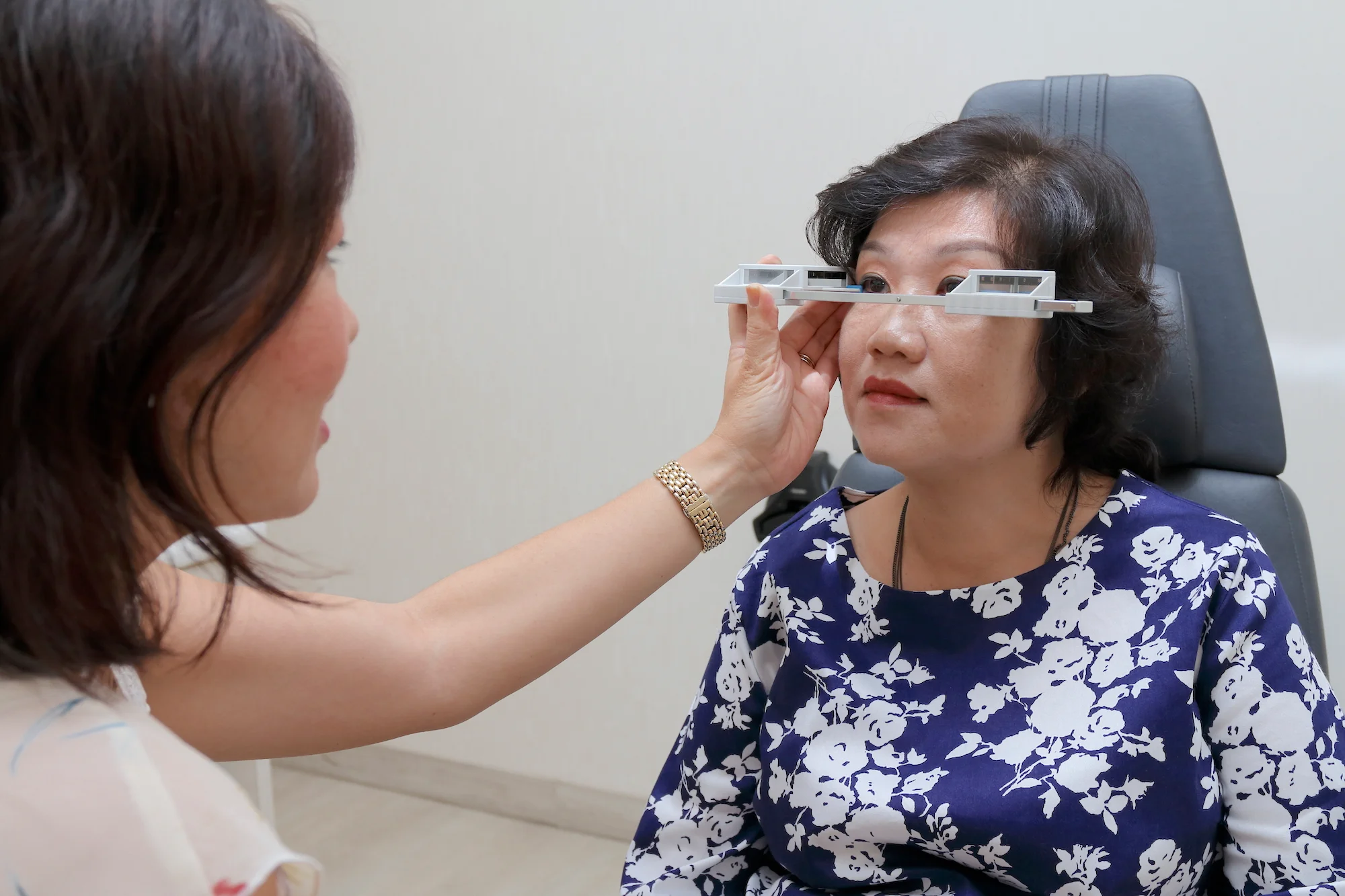
Eyelid Surgery
Eyelid surgery encompasses procedures that address functional and reconstructive concerns affecting the eyelids. These surgeries can restore the eyelid's proper position and function, improving both vision and comfort.
Types of Eyelid Surgery
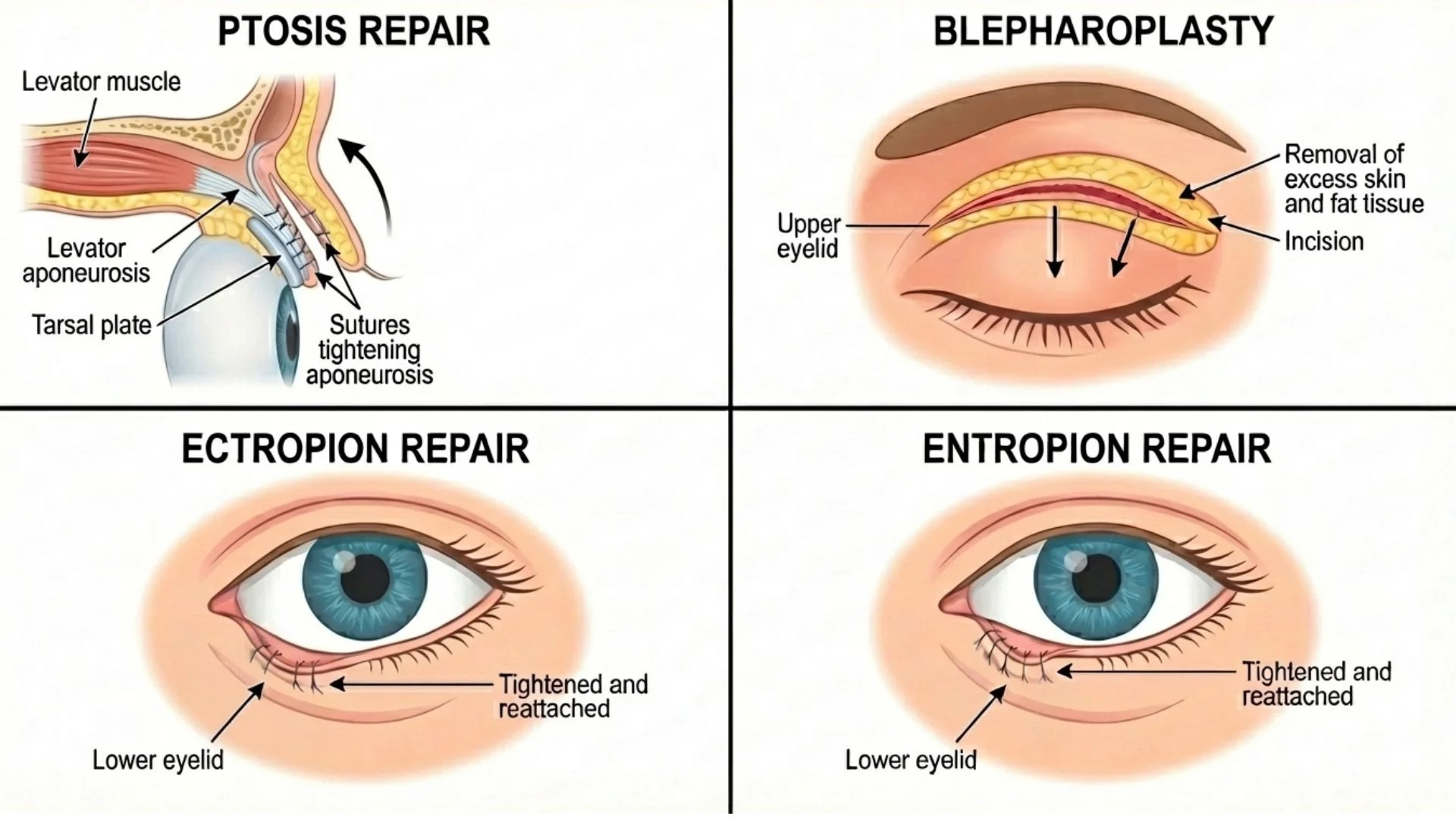
Ptosis Repair corrects drooping of the upper eyelid that can obstruct vision. Ptosis may be present from birth or develop with age as the muscle that lifts the eyelid weakens.
Blepharoplasty removes excess skin and tissue from the upper or lower eyelids. When sagging upper eyelid skin blocks the upper visual field, this is considered functional blepharoplasty rather than purely cosmetic surgery.
Ectropion Repair corrects outward turning of the eyelid, which prevents proper tear drainage and leaves the eye surface exposed.
Entropion Repair corrects inward turning of the eyelid, which causes the eyelashes to rub against the eye surface.
Who May Benefit
Eyelid surgery may be recommended when eyelid problems cause:
Obstruction of vision (documented by visual field testing)
Chronic eye irritation or discomfort
Difficulty keeping the eye properly lubricated
Corneal damage from exposure or eyelash contact
Significant asymmetry affecting function
The American Academy of Ophthalmology provides information about various eyelid procedures and their indications.
The Surgical Experience
Most eyelid surgeries are performed as day procedures under local anaesthesia:
The specific technique depends on the condition being treated
Surgery typically takes 30-60 minutes per eyelid
Fine sutures are placed in natural skin creases where possible
Most patients go home the same day
For ptosis repair, the surgeon may adjust the muscle or tendon that lifts the eyelid. For blepharoplasty, excess skin and sometimes fat tissue is carefully removed. Ectropion and entropion repairs involve tightening or repositioning the eyelid to restore its normal position.
What Results Can Be Expected
Functional eyelid surgery typically achieves good outcomes:
Vision obstruction from droopy lids is usually relieved
Eye comfort improves when proper lid position is restored
Corneal protection is enhanced
Results are generally long-lasting, though ageing continues
Research in peer-reviewed journals demonstrates high success rates for eyelid surgery when performed by experienced oculoplastic surgeons.
Potential Risks
As with any surgery, eyelid procedures carry risks:
Bruising and swelling are expected and resolve over 1-2 weeks
Temporary difficulty closing the eye may occur, especially after ptosis surgery
Asymmetry between the eyelids may require adjustment
Dry eye symptoms may temporarily worsen
Under-correction or over-correction may occasionally require revision
Infection and bleeding are uncommon but possible
Scarring is typically minimal when incisions follow natural creases
Expect bruising: Bruising peaks at 2-3 days and usually resolves within 2 weeks. The final result may not be apparent for several weeks to months.
Medical Disclaimer: This information provides general guidance about eyelid surgery and should not replace professional medical advice. The specific procedure recommended depends on your individual condition. Outcomes vary based on the underlying problem and individual healing. Please consult with our ophthalmologists for a thorough evaluation and personalised surgical plan.
Pre-Operative Care
Complete all required assessments including visual field testing if indicated
Discuss all medications with your surgeon, especially blood thinners and aspirin
Stop smoking if applicable, as this affects healing
Arrange transportation home and assistance for the first day
Prepare cold compresses and keep your head elevated after surgery
Follow fasting instructions if sedation will be used
Post-Operative Care
Seek attention if you experience: Severe pain, significant vision changes, increasing redness or swelling after initial improvement, or discharge suggesting infection.