

Adjunct Associate Professor Au Eong Kah Guan Discusses Myopia Prevention on Yah Lah But Podcast
Santiya William, B.Optom Ophthalmic Technician & Staff Writer, IECRC
Adjunct Associate Professor Au Eong Kah Guan, Medical Director and Senior Consultant Ophthalmologist at International Eye Cataract Retina Centre, recently appeared on a Yah Lah But podcast to tackle childhood myopia and its prevention. In the episode "Myopia Epidemic: The Next Global Health Issue | #771," he unpacked the science behind short-sightedness and shared practical tips on myopia control strategies which parents can start today.
The statistics Adj A/Prof Au Eong shared are sobering. Between 80% and 83% of Singaporean adults are myopic, making Singapore one of the world's myopia capitals. He was quick to dispel a common misconception: myopia isn't just about needing spectacles. High myopia significantly increases the risks of cataract, glaucoma, retinal detachment and macular degeneration later in life. Each additional dioptre or degree of short-sightedness compounds these risks, which is why paediatric eye care and early intervention matter so much.
What causes myopia in children? Adj A/Prof Au Eong explained that children’s eyeballs literally grow longer in response to how they use their vision. He cited fascinating research on Inuit communities in Canada, Alaska and Greenland, where myopia rates jumped from under 2% to over 50% within one generation after children started attending school. Genetics haven't changed; the environment has. Too much close work and not enough outdoor time are reshaping young eyes across Asia.
Currently, there are three broad categories of myopia control measures. First, lifestyle changes: children should spend at least two hours outdoors daily. Bright natural light triggers dopamine release in the retina, which acts as a natural brake on eyeball growth. Second, optical interventions including myopia control spectacle lenses, myopia control contact lenses, and orthokeratology contact lenses worn overnight to gently reshape the cornea, can slow myopia progression. Third, low-dose atropine eye drops which have proven highly effective at slowing myopia progression with minimal side effects.
The most exciting development in paediatric ophthalmology? Research now suggests these treatments can prevent myopia from developing in the first place. Adj A/Prof Au Eong emphasised that delaying onset by just a few years dramatically reduces a child's lifetime risk of vision problems. Given that myopia typically emerges between ages six and twelve, parents have a narrow but crucial window to act.
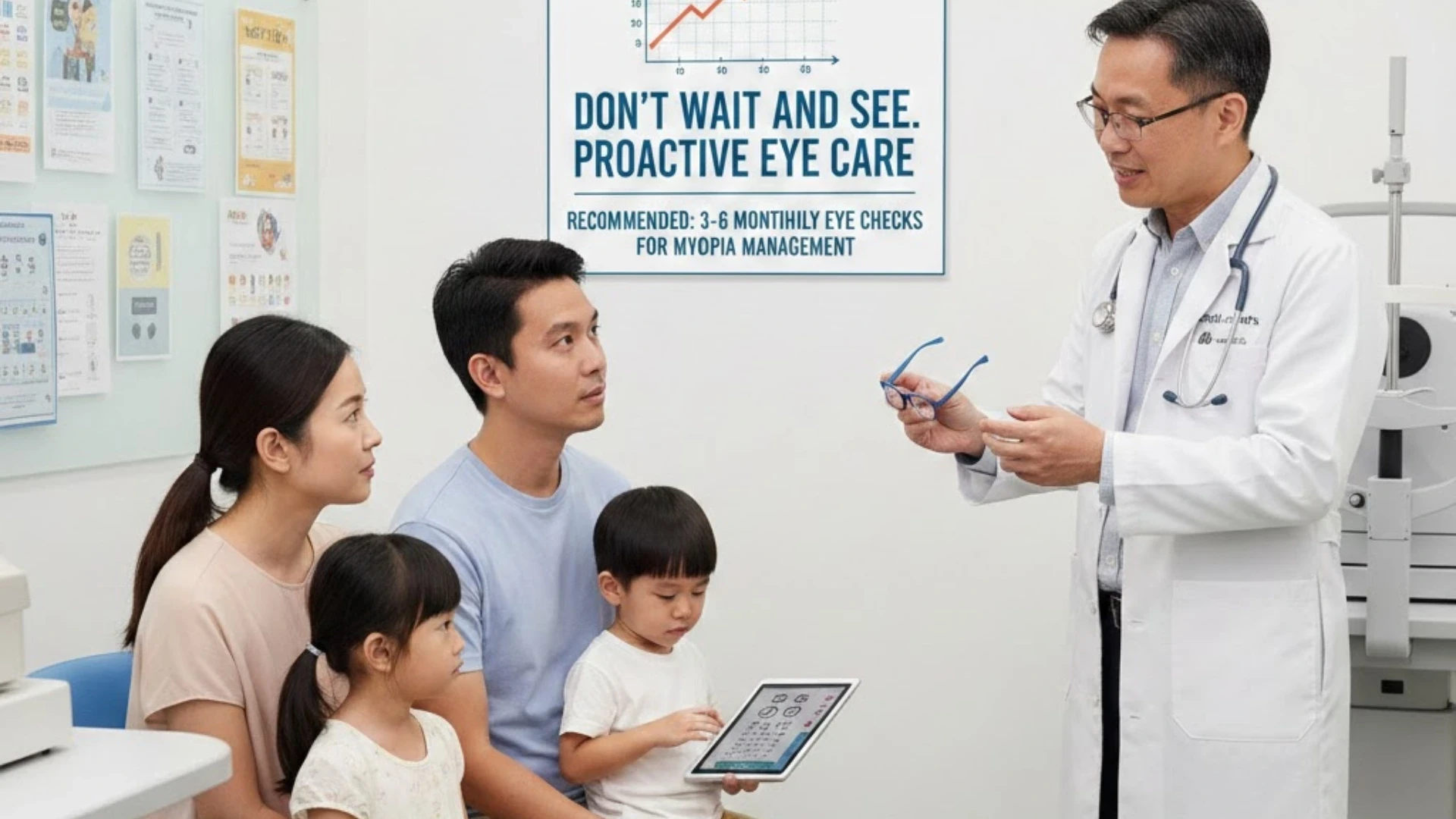
His advice for Singapore parents is straightforward: don't wait and see. In a country where four out of five children will eventually become myopic, taking a proactive approach to children's eye health makes sense. He recommends three to six monthly eye examinations once myopia management begins, allowing eye care practitioners to adjust treatment strategies as needed.
Watch the complete conversation on the Yah Lah But YouTube channel for detailed insights on protecting your child's vision through evidence-based myopia control.